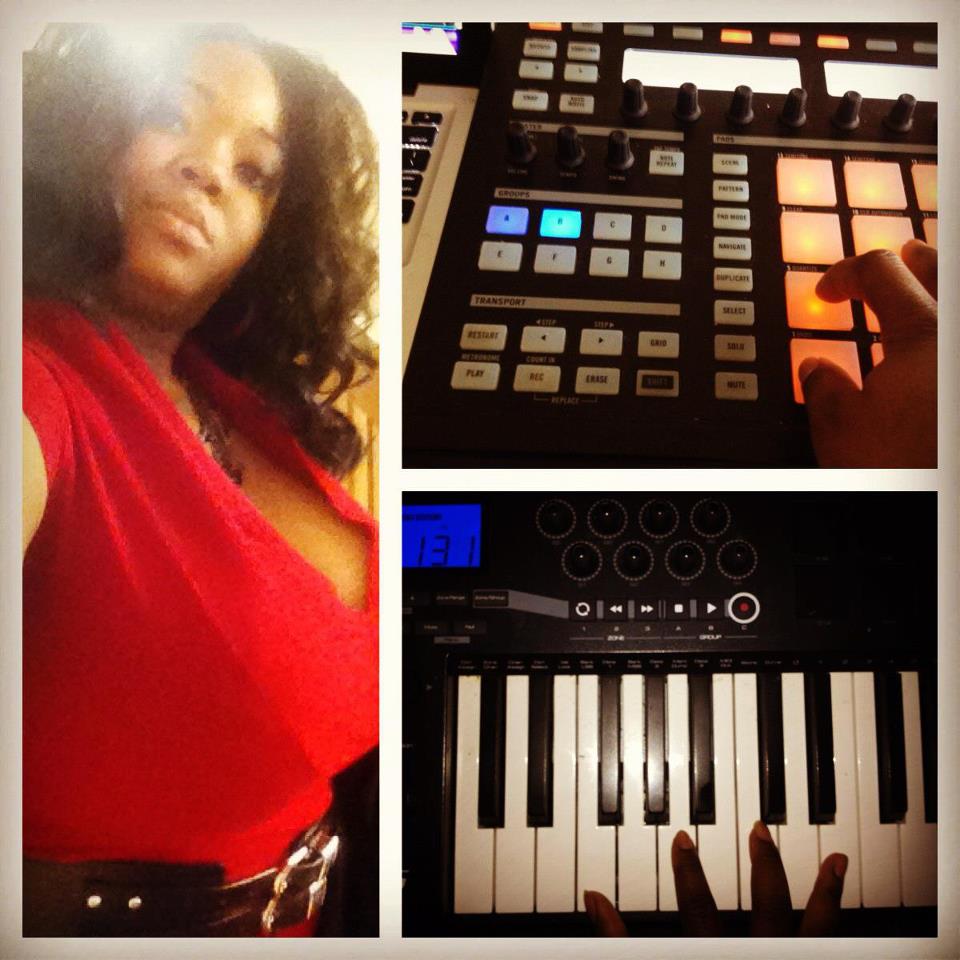

Achickwitbeatz presents the Instrumental Intel podcast, bringing you information instrumental to your artistic career including music industry news & tips, insights & interviews, and beats for your inspiration. Listen on Saturdays at 7 pm EST on Grander Radio and Achickwitbeatz.com.
Follow on Facebook, Instagram, Twitter, YouTube Audiomack & SoundCloud, and subscribe on your favorite podcast platform. Download the Grander Media app to listen to Grander Radio on the go.


- Art
- Independent Labels
- Internet Radio
- Music Documentaries
- Album Reviews
- Music History
- Music Industry News
- Free Game Friday
- Free Downloads
- Poetry
- Books
- Interviews
- Did You See It?!
- Hip Hop History
- Hear Here
- Music News
- Hip Hop Documentaries
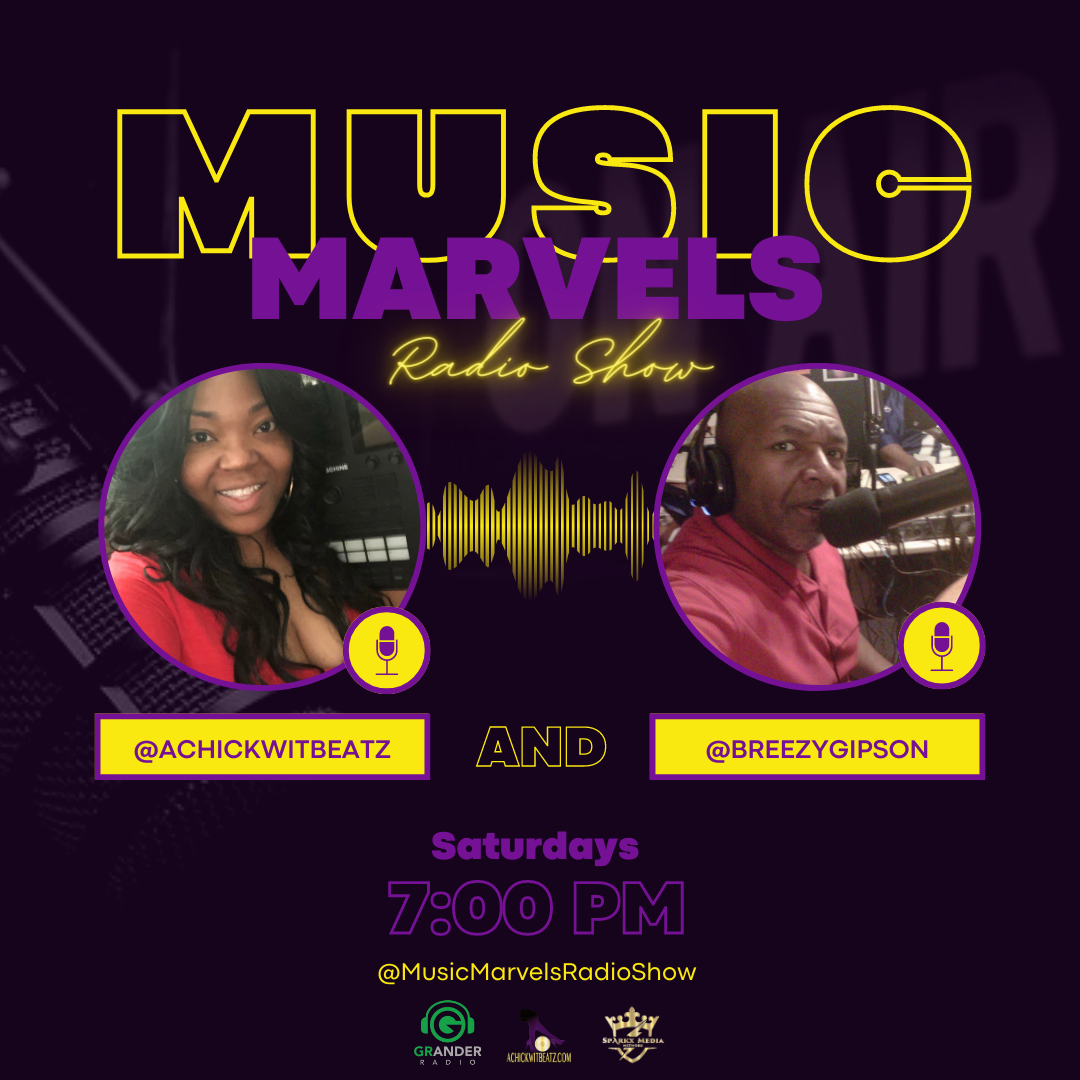
- Music Marvels Radio Show
- Think Piece Thursday
- Mini Documentaries
- Instrumental Intel
- Music Humor
- Indie Analysis
- Conversations & Quotables
- Music
- Resources for Artists
- Podcasts
- Beats/Instrumentals
- Music Education
00:00
Hey, thank you so much for tuning in to Instrumental Intel. I'm your host, music producer, Achickwitbeatz. And I'm glad that you're here with me. Today's episode has music industry news, beats by me for your inspiration. And later I'll be joined by my special guest, Phire Free. And we're gonna talk a little bit about everything from music culture to the machine and basically how artists are packaged and branded and presented to the public. So it's gonna be a great episode. And before I go ahead and drop that first beat of
00:29
course I gotta give a shout out to my home station, Grander Radio out of Grand Rapids, Michigan. And with that, let's go!
[BEAT BREAK]
09:02
Alright, I'm back with the Music Biz Brief. First up, TuneCore has partnered with fintech firm RoyFi to launch a royalty advance program for independent artists, offering up-print cash in exchange for a flat fee to be repaid through future earnings. The new direct advance option lets artists access funding without giving up ownership or equity, with repayment automatically ending once the advance is recouped. Next,
09:27
Some students at Berklee College of Music are pushing back against a new elective on generative AI songwriting with a petition signed by over 300 people calling for the course to be removed. The class explores using AI, tools in the creative process, and their impact on the music industry. Critics argue that the technology raises ethical and creative concerns, but the school says it's intended to prepare students to navigate emerging technologies in the industry.
09:54
Secretly Distribution acquired Babel Ops and its entertainment and intelligence platform, adding data, analytics, and royalty processing capabilities to its operations. The tools support reporting for over 1.2 million artists and will continue serving independent labels and music companies. The companies say the deal aims to strengthen tech infrastructure for independents as competition around data and distribution intensifies. Canada's collecting society so can
10:20
reported record collections of $587 million in 2025, up 5% year over year, partially driven by continued growth in digital revenue. Despite the increase, total royalty distributions to members remained essentially flat at just over $511 million, with gains in performance royalties offset by a drop in reproduction rights income.
10:41
And finally, a federal jury in New York ruled that Live Nation operates as an illegal monopoly, finding the company engaged in anti-competitive practices that harm the music industry and overcharge consumers. Surprise, surprise, right? Anywho, the case, brought by multiple states, highlighted internal communications and pricing practices, including added ticket fees. A judge will determine penalties which could include significant fines or structural changes to the company.
11:08
Of course, Live Nation plans on not letting this be the last word, so we'll have to see what happens. But yeah, this isn't really a huge surprise to anyone who's attended live events and had to go through Live Nation and Ticketmaster. Alright, that's a wrap for the Music Biz Brief. I'm gonna take a quick pause for the cause, and then I'll be right back with my special guest right after this. Keep it locked!
[BEAT BREAK]
17:22
Hey, I'm Achickwitbeatz, multi-genre music producer and strategist to indie artists and labels. Visit achickwitbeatz.com for resources for artists and instrumentals in various genres available for songs, vlogs, blogs, podcasts, themes, TV, film, commercials, and more. Once again, that's achickwitbeatz.com. That's A-C-H-I-C-K-W-I-T-B-E-A-T-Z.com. Let's make something happen.
17:52
Thank you so much for tuning in to Instrumental Intel. I'm your host, music producer Achickwitbeatz. And I'm thrilled to say that I have back on the line with me and in the virtual building, Phire Free. Just in case anybody missed you the last couple of times you were on, if you could give a brief introduction as to who you are and what you do. Hey, so my name is Phire Free. I am a poet and an author and I am, you know,
18:22
full-time family person. So, but I'm so grateful to be able to share this Hip Hop space, former lyricist with Achickwitbeatz and my community. What up everybody? Thank you so much for being here. Absolutely. So, you know, I guess first to kind of kick it off, since you have a background in so many different things.
18:51
Yeah. Let's see. I guess the best way to ask the question is, where do you feel like you're kind of gravitating towards most or is it still kind of multi-hyphenate? Do know what I mean? Like, I feel like sometimes we have different seasons where we might be, you know, more of an author during this season or more of a writer or, you know, whatever the case may be. I love you so much because this, you know what, your questions really, truly make me dig.
19:21
So right now, to be honest, uh I've been going through this journey of understanding that I'm a writer that was, I don't wanna say I wasn't encouraged, but the resources that could have been available to me weren't necessarily available to me. So I journeyed and I've seen things and I've learned things and I've applied things. And so I would definitely lean into I'm a writer.
19:51
And um so just like the really cool part about that right now is that um I'm doing an Afro, I'm working on my Afro fantasy novel uh that is centering on non-binary Afro, like Afro centric, like Afro centric uh experience. But also, you know.
20:17
you know, with like, you know, levels of uh fantasy and science fiction. And I'm also a poet, so I'm also working on my second collection of poems, uh Commit to Healing, Volume 2, Reclamation. First of all, love those titles. Thank you. I really love what you're doing, especially with the Afrofuturism there.
20:47
was a section at the Smithsonian when we checked out the African-American museum there. And it was just kind of cool to see how long it's kind of been in the works, you know, the whole confirmation, like, yes, there are black people in the future and how historically we've kind of been left out of those conversations. And so, you know, one of the things that stuck out the most to me, like walking through and looking and, you know, I'm like, okay, none of these people knew.
21:17
Um, well, I mean, they may have known how important their work was to them at the time, but they didn't know that they'd be in the Smithsonian kind of encouraging people to think about black futures and whatnot. um, uh yeah, hats off to you for doing it. there any, and, uh, also I want to kind of, shout out Cedric Umoja. Uh, he's one of the artists that I follow. He did the logo for a label that I used to be on called Intimate Venues.
21:45
And that's what most of his work centers around. so, yeah, just kudos to. I really, I really love uh those of you that take the time to do it because it's important and it's needed. So yeah, if you could talk a little bit about your inspirations behind that. Oh my goodness. So, so for real, so for real, for real, like as, as you may know, like, especially as like a nineties um growing up in the nineties and like growing up.
22:14
throughout this last few years before, you know, these very steep turns, um we had like this beautiful relationship with being able to like perceive not just a future, but perceive the present differently and see kind of the things that were seeing the layers beneath the top layer, you know, so we had this like top layer of everybody's happy, everyone can assume money is flowing, everything is good.
22:44
But then there were all the other layers underneath. Like what is a person really saying when they're saying, you know, retail therapy? What is the person really saying when they're talking about, you know, getting go out and get a job, you know, like, you know, follow the formula, go to school, get a good job, you know, take care of yourself. But like, we're looking at the layers beneath that. It's also kind of like how many people got called out for, you know, for the harms that they were creating.
23:14
And so when I think of Afrofuturism and all of the power and strength behind that um and the science fiction avenues, I think of the louder voices that have become more quiet over the years, like Octavia Butler, ah who kind of talked about all of those themes, ah but kind of put it in a way that we could see it every day.
23:41
and how it became something that wasn't so heavy. I also think about how sci-fi specifically has always intrigued the parts of the brain. It's always encouraged people to ask some of those more critical questions. And when people are not able to ask those critical questions out loud, when they're not able to have those critical conversations,
24:08
It's been like being able to go into genres that um speak to that part of the brain, that speak to that part of the mind, that have been really able to expand that conversation. And I can also reflect on the fact that like, we did some of that in school, but in school, it all was centered on like white experiences.
24:36
and colonization and all of those are specifically about like rooting out and um it's called social death. I don't really want to get really into it, but um it's really about erasing black people um and erasing the black community and black conceptual conceptualization and
25:06
That's something that, especially uh in a space like this one, in a country like this one, it's supposed to be impossible to do because of how many contributions and how much contributing um Black people have made. So those are some of my inspirations. Okay. Yeah, it's kind of a wide array. You mentioned about how, you know, it's kind of touched on in school and...
25:35
Yeah, there are a lot of things that could be done differently to kind of, I guess, educate those coming up to how to use these types of topics for creative expression. And so, I guess with that being said, I know that a lot of places do have like, you know, maybe after school programs and that sort of thing. But what do you think it would be like if this was kind of uh ingrained in us, maybe like as a subsection of English?
26:05
instead of just an elective, you know what I mean? Like how do you see that changing things? I mean, it's so wild that you put it that way. Cause yeah, I honestly believe that if, if in reality, if, if blackness were able to be, um, and not even blackness, but if the African diaspora were able to be integrated into culture and allowed to
26:33
form and build as a culture the way that we know that it is and the way that we know that it can be, it would look like, our entire curriculum would look different. It would look like children learning about, you know, Bobby Hutton, as well as being able to learn about young, up and coming, present youth.
27:00
who are changing their communities right now, who have changed their communities 10 years ago. um It would include um talking about how, you know, how basically how black youth changed TikTok, right? Like that would be what that would look like. um And it would look, it would be a discussion about how um black uh academia
27:29
has changed the understanding of the vast, you know, the dynamics of politics um and collective understanding of the fact that like people say, I'm not political, but recognizing that for, especially for a young person, they don't have that choice. You know, for young people in our community,
27:58
They don't have the choice of saying I'm not political. They have to go to school with teachers who have implicit bias. So their whole life is political. Their whole life is going, OK, if I do this, will this upset the teacher? How do I dress? How can I wear my hair? How do I interact with my peers so that my teacher doesn't give me bad marks? uh And we don't, because, you know, because
28:27
I know that me as a student, I was so grateful to finally be out of school. uh It's really easy to forget that that's kind of the pressures that are on young people when they're in a nationwide K through 12 curriculum. That's an interesting point. specifically in relationship to creativity, when you've got that kind of stress on you. uh
28:53
Yes. You know, it's kinda hard to make the mental time to be able to create freely. yeah. And you and I were kind of getting into the authenticity of that, right? Like when young people are learned, have to like tune or hone their authenticity to lean into what's acceptable.
29:20
we end up with what we now know is the mainstream or commercial Hip Hop community, right? people who are willing to pretty much throw their family under the bus to sign on that dotted line. And we discount that that started so early.
29:44
But we really, if we really start breaking it down, we see that like it started when, you know, a child was trying to negotiate their grades and make sure that they could, you know, show up and be that black, that symbol of black excellence that we've pushed so hard on our generations. Yeah. And a lot of it, uh you know, is tied to assimilation. So, Yes. Yeah.
30:14
That would make sense as to why it's reflected sonically. Oh man, the conversation about Jay-Z and Black capitalism. Oh yeah. I'm I'm not, I'm not going to go off on Beyonce again. I mean, honestly, he's told us that from the beginning. Like, I mean, it's not like he's changed into this person. I mean, there's always been that same braggadocio.
30:43
You know, from the moment he started. So, yeah. He never hit it. Never hit it. And then like, and if we, if there was any question about whether he would hide it, oh somebody I just saw a comment the other day about how he made that whole song with R. Kelly, the Not Guilty song. Yes. And.
31:07
It's like, yeah, that man was so guilty, but it's like, but at that point, you know, it was more important to make the dollars than it was to uphold the ethics. Yeah. Um, you know, and yeah, I do believe that a lot of that is kind of taught to us as we're coming up. Um, I know that I agree what you mean with.
31:32
saying that some people don't really have the luxury to say that they're not political because I mean, one way or another, you're representing something, whether you're aware of it or not. I do believe that because he's been so forthright with us from the beginning, I think people might put too much weight on his thoughts, you especially when they were talking about, you know, where are going to take the however much money.
31:59
versus the dinner and how many people actually selected doing the dinner. And then they said, he was like, well, no, you should have took the money. But yeah, I guess because people are kind of looking for the results and not necessarily the path to how he got there. I think that a lot of times we put too much weight on the wrong things and then we still keep seeing this reiterated and music goes kind of coming up, kind of wanting to follow those same footsteps.
32:29
Does that make sense? No, totally. I think you tap right into it actually, is the fact that we have been taught. And even if we go back to Hip Hop back in the day, I believe they used to kind of try to show us the pathway and how you jump from bank to bank. They'd be like, we were over here on this street, then we went over here and we did this. And they talked about their journeys.
32:57
And then at some point, like when, when it became about the blow up more so about the come up, we have watched, you know, we, we even, mean, be, oh but we even knew like Lil Wayne's journey even more so, right? We knew Lil Wayne's journey. We watched that. We literally watched him grow up. And now we just, they just show up. It's very much so commercialized.
33:26
these artists just show up on the scene and there's, you know, there's really no story. um You know, there is a story, but the story is not the story. The story is kind of like what they choose to give us, because we don't get to watch it, even though with social media, we're made to feel like we're watching it. But we're not, you know, we know like social media is so
33:55
heavily.
34:00
doctored and managed to the point where, you know, a lot of people don't even tweet for them. know, lot of people, like that's, but a lot of people don't even, they, don't even post their own videos. You know, they, have people who do that for them. So. Yeah. Um, and honestly, I haven't even seen that within the independent artists sector. So people that don't have, you know, thousands of followers, like even they're hiring.
34:29
social media managers and whatnot, to kind of do that. So you still don't really get to see the person, just like you said, the story that they want to present to you. It's, know, which is, you know, Hip Hop was supposed to come out as this like very authentic, you come as yourself, we accept, like, I mean, and I, and maybe that's been like every movement, right? Like every music genre, liked the artists that were so authentic and not hor-
34:58
highly uh formulated, but that's one of the biggest parts of where this community has been able to build from and it's been so absorbed. I just think about Dochi, right? Everybody fell in love with Dochi because she had this story about how I think she left her internship or she got fired and she's like, I'm just gonna put my music out.
35:26
And then next thing you know, she's trending and she's across the platform and she's on and then she releases anxiety and everybody is ready, right? But at the same time, was like, yeah, so at what point did your talent manager tell you what to do? At what point did your management company and your support
35:56
um kind of push you out there to the point where now you are where you are. um And there's so, because there's so many people who have done the same thing, right? We know those people. Absolutely. I always forget who I want to say it was Steve Jobs, like where if you look really closely, most overnight success stories took a long time. So it's like they make it all seem like that. But like you said, they cut out that main part.
36:25
that could actually help people figure it out. Yeah. Yeah, exactly. Like, we're just gonna pretend this part wasn't here. Yeah. Yeah. How many nos came, you know, during that time? How many times were you hung up on? How many times were your emails ignored? uh How, like, at what point did you build a team? Like, how many people were with you when, you know, pushing behind the scenes, handing your...
36:53
your music and your story off, know, to people who did you know somebody who knew somebody? Yeah, because honestly, I had never heard of Pat the manager until he was doing Chance the rapper. But Pat the manager was there, you know what I mean? But yeah, I did not hear that name until the Lawson. Right? Wow.
37:20
Yeah, there are a lot of steps that are missing in between. think that when that's missing and you know, honestly, even if they choose not to kind of acknowledge that timeframe, all right. But I feel like the people watching it need to be aware that there was something that happened in between time because when they do what the artist said they did and they don't get the same results, a lot of times they get frustrated. They end up quitting or, you know, saying I don't get no support.
37:47
My insert city never supports their own. I don't know why everybody acts like that's their own special city as if people don't deal with that everywhere. yeah, you know, that goes back to that critical thinking we were talking about. So, you know, that there, there was a chunk of information that happened from start to finish that you don't see, but you can't expect your story to look the same way that their curated story looks.
38:15
And there's this, oh man, oh, I'm about to, okay. Cause when we start talking about the curated story, right? And have you been keeping up with LaRussell? oh No, only intermittently. uh Okay. Yeah. I have my own reasons for that, but I'll save that for I understand. But with LaRussell, LaRussell's story was that he started out in
38:44
like Inglewood, the Bay Area. Yeah, yeah. And, you know, he bought his home and he turned it into, you know, this place where he can hold like, you know, this whole come up story, right? But then he signed to Rock Nation now. Yeah, yeah. And it's like, OK, so.
39:08
You want it and and he's but he's put out this good image right this very positive uplifting the people image and we were all I mean everyone was rooting and a lot of people were supporting but he decided to like I mean it's almost like he did a 360 but I don't I'm the kind of way I feel about it was almost like his story was curated from the beginning you know what I mean? I believe it was.
39:38
Okay. Yeah. Yes. And like, and then to be like, you know, he's now signed a rock nation and it's like, so what you can be, you know, so that you can say you came from nothing and now you're signed as like one of the most interesting personalities in the business. So yeah, then the turnaround and just tank it all with a
40:08
poor choice of a release. And then fine, you know, sometimes people make mistakes, but to double down on the mistake instead of, you know, just say, okay, I hear you. I did not see it that way, but I see how it can be taken that way. You know what I mean? Like a simple, my dad probably could have changed all that, but. My dad would have been so simple. Yeah. You know, what is that? What stops you from?
40:38
saying that. I mean, personally, that whole thing sounded like the very same things that people have been saying about Jay-Z for years. this is, I mean, that played out. It was like, wow, okay. Well, then there you go. There you go, buddy. Yeah. So, I mean, you know, and I really don't know the full story. All I know is, you know, kind of what I've seen and observed and
41:08
kind of got a feeling for, but it goes back to that word again, the authenticity. How do you feel? Does the image match up with what you're hearing and what you're seeing? Or even just logic uh from understanding the way the industry works. I've even heard some people recommend or say like, his most recent choice might've been part of the ritual. Like who knows? Yeah. Right. It was very, like that's the worst part.
41:38
part though is like, I don't really, okay, I do get into the patternistic stuff, but I don't really get into it. But if you do really look at the ritual, that was right on par, right? Like that was like, was like step one, step two, step three. Yeah, it'll be regardless of what you believe that it's a part of, it's undeniable that there's
42:04
some unspoken rules that happen within the mainstream industry. So yeah, I'm not trying to say it's Illuminati or any of that stuff, but there are rules in order to kind of operate within that space. And yeah, to me, it seems like that might've just been another step or I mean, you know, it could've just been a poor choice and maybe just as a hard time saying, hey, I messed up. Some people do have a hard time admitting that, but.
42:30
You know, again, I think it goes back to the audience being aware of how things operate and just because you like the music, you know, pay attention to when you might be being gamed or, you know, you probably shouldn't be putting so much weight on a particular artist's voice or for them to speak out for you. Well, that's well, and that's something that I've been watching happening to this this.
42:58
especially within the last couple of years. Because oh with everything that's been going on, there has been an intent to say, listen, we have to stop acting like these celebrities, like these celebrities have any insight into the struggle. When at the end of the day, they only have insight into what we tell them is the struggle. You know what I mean?
43:28
As we, when we stop talking to them, we stop telling them when they, when we stop allowing what we want to trend for them to exploit and extract, then they don't know what to do. They're lost.
43:46
Yeah. Well, for us, like, we're the people who are actually driving that. I know I had spoken. So the Gwendolyn Brooks Poetry Contest is taking place. It ends on May 1st. And the poem that they're using for my daughter's uh classroom age range or classroom range is called Behind the Scenes.
44:15
And she literally talks about how um the people who are upholding the images, the image of like, you know, the president, vice president and the secretary of state, how those people are the people who like iron their clothes and who clean the rooms that they're standing in and who keep that image of, you know, clean cut, well groomed, you know, uh
44:45
this, this, you know, for lack of a better word, perfection. Those people are, she doesn't even use the title. She doesn't use worker or, or service worker or, you know, she doesn't use any of those titles. She just refers to them at the very, very end as a man or woman. And instead she describes all the things that they do. And the reason why I'm bringing that up is because
45:14
What we as, you know, the community, the collective are doing is that's us. We're the people who are doing all of this image cleaning. We're the people that these people build their brands off of. And they, when we, and they're talking to us about us as though they are us and they have no idea who we are and they don't care to. That's a soundbite right there. Thank you.
45:44
And here we are, you know, we're finally reaching these points of being set up and tired and overworked. And at the same time, we're still trying to figure out, know, why aren't these people understanding what we're going through right now? When it's us who have always been the voices.
46:10
Worst of all, it's been smaller artists, it's been artists that are not super well known, that larger artists have been able to build their entire brand. It's the smaller artists who have been holding that up. And it's up to us to actually go and support those artists that are lesser known. Because a lot of times it's them that we like anyway. It's not these, you know, manufactured machines.
46:39
Yeah, that's such an excellent point. I feel like we just covered so much ground, oh but yet still just kind of cracking the surface just because it goes so deep and I do a lot of social listening and just to kind of see that.
47:02
or how many people out there don't actually recognize these patterns and you know exactly what you said about how it's not really reflecting us. uh I had a thought there was a video where Manny Fresh was talking about how nobody wanted the do still fly and they told him he was crazy for it and I'm thankful that he you know still is like no we got to do this but yeah they're like oh no people think we broke talking about got a quarter tank of gas in my new E class.
47:31
Right, right. That's what people are living. People are gonna love this. They're gonna understand it. Yeah. So, because I remember my mind was blown when I found out that the rest of them didn't want to record it. And I'm like, that's one of my favorite songs. Why? Because that was real life. yeah. Yes. Yeah. Yeah. Even back then for some of them to be like, no, that's not the image we were supposed to be portraying. But if it's real, it's real. Isn't it wild that that was...
47:59
Because that's like one of the that's one of the main tracks that they remembered for. Yeah. And it's been what has it been over 20 years? Yes. Yes, is. That was one of the most brilliant call out songs because and I know why nobody wanted to do it because it was all of them. Yeah.
48:26
but he had the foresight to know, like he understood who the audience was. And it wasn't like he was trying to make us feel like he was above us, but to say like, hey, I'm there in the struggle with you. I think that's why it hit differently. You cause I mean, not to say that I don't like, uh you know, some of the mainstream songs that do the bragging and whatnot, but you know, I don't want to be told or reminded of how broke I am all the time, you know, listen, you know what I mean? Like, yeah.
48:56
It's nice to have those that can actually relate to you instead of just kind of pulling on where you are at your current stage in life compared to how much money they're making. Well, exactly. And I think one of the reasons why that song really, really hit me too, especially in how real it was, was because I think they also, the punches were comedic, right? wasn't like they were like, man, I'm just like,
49:24
It wasn't like, um, uh, my life. I've been po. Yeah. can't recall right now. Um, but it was, it wasn't like, uh, you know, commiserate with me song. was like a let's let's drink and like talk and like, let's be real. Like let's sit down and have, have a cut. Let's play a card game, bro. Let's, let's talk about it. Yeah. Like, and we don't.
49:54
I mean, when was the last time we've had a song that's really been, you know, on that? Oh my gosh. I honestly can't recall. I can't think of a single one within the last 20 years. I know. Yeah, listeners, if you know some, drop them in the comments, please. Yes.
50:17
Please, because I think that's one of the reasons, I can be honest, I think that's one of reasons why I have been moving toward a lot of the resistance and protest and just kind of some of the more revolutionary arts and thinking is because it's nice to be in a
50:45
where you're planning your future and you know what you want and you can create those steps for yourself. um But we also, a lot of times we do not pay attention. We do not uh factor in that the steps don't always look how we plan them. And instead of having the conversation that, hey, I had to pivot over here, I had to sidestep over here,
51:15
or I had to do this a different way, I had to take a different approach to this and seeing that as the win that it is. um A lot of times we feel like it's a personal failure. I mean, one of the things you said about me when we started was, you are in so many different things. And the reality was that I had to restructure my life because I am authentically born a writer.
51:44
But, you know, nobody was there to say, okay, let's figure out where you can, where you would be the strongest. Because at the time when we were coming, and even now, you know, the biggest things about our, education system is go and make money. Like, you know, if you could change the world when you do it, that's good, but go make money. And, you know, like, and, and at the time we were coming up,
52:12
there was no money in writing because it was so hard to get into. Then it became there was no money in writing because it's oversaturated. Then there was no money in writing for this reason. Then there was no money. And so it was like as much, know, yeah, your dream is to write that novel or that play or whatever. being from our culture, there's such a rich history of Black creators who have written plays and books and novels and
52:42
essays and analyses and yet, you know, a lot of that access to that I didn't even get until after I finished high school. Yeah. Yeah. Yeah. Absolutely. I can say the same thing being a few years ahead. Might have been, you know, like maybe one or two.
53:07
instructors throughout time, you know, that tried to do their best to make sure that we did. But, you know, as a whole, it just wasn't. It was a ball that no one was ashamed that they dropped, you know? And then on top of that, because it even goes even, at least for me, it goes deeper to think about all the black musicians.
53:33
that we don't talk about. We don't talk about, you know, John Coltrane or, uh you know, we might hear about, you know, an occasional uh artist, but did you see Sinners? Yes. Yeah, like I didn't even know that Buddy Guy was still alive. I did not know much about Buddy Guy. You know, I remember my parents used to have like pride when they saw people. um But to have, um
54:03
Seeing like, you know, in a mainstream cult classic like that. Yeah. It was like, wow. Yeah. You know, actually come to think of it, when you said that about not talking about Coltrane, you're right. And I was reflecting on the times that I did hear Coltrane mentioning most of the time it's Hip Hop. So it's almost like, you know, it makes me miss a little bit more.
54:32
when there was a little more education kind of sprinkled throughout. Like even if the entire song wasn't that way, you you still kind of got some background. ah You know, even with Lauren Shoutout, Nina Simone, you know what I mean? Like, I mean, there used to be a little bit of history and homage uh that you could still kind of glean from and kind of do your own research and dig a little deeper. Yeah, that's given me some ideas there. So I'm really glad you said that.
55:02
Yay. Yeah, like, I, you know, I hate to say this, because I love Big Mama Thornton. Yeah. And the ties back to rock and roll and the ties back to jazz and the ties back to blues. And we really like if you really look back at it, it's there's storytelling.
55:31
and the evolution and changes. I think it gets, I'm not gonna say it doesn't get lost, it gets missed. It gets overstuck because it's so rich and we try to maintain and manage, you know, not to overwhelm people. And I really do challenge, um I challenge everybody, especially with mental health awareness,
56:01
um with poetry awareness, with hip-hop awareness, um to really truly like look at those building blocks and those foundations that have built you know the the musical entertainment industry of this country because it's it's I don't want to say it's enslavement all over again but it's it's not far from it. You know you you have this whole
56:31
beautiful hit, you know, commute collective. And there's so many different components of it because we are not even going to get into um the Afro Latino and Afro Latina components that we just act like don't exist in the South. like there's this this very powerful story that has been told.
57:00
in the entire existence of this quote-unquote nation that has created the building blocks that now like, you know, K-pop wants to pretend black people have nothing to do with.
57:25
It's wild! it really is. It really is. So, alright, I can't believe how quickly this time went. And so I'm hoping that we get to do another part of this again soon. Because this is beginning to feel like a series. Because I think these things are important to discuss, because all this stuff affects our creativity.
57:52
Thank you so much for allowing me to be here and allowing me to just have this moment with you. is because it's been like an hour, but it has been a moment. And I truly appreciate it. And I really, I'm so excited and grateful to spend this time with you. likewise. And yeah, thank you for taking time out of your schedule. But before I let you go, I want to make sure that everyone knows where they can find you.
58:22
Follow you, whatever you want them to check out that they have all the necessary information to do so. So you can find me on IG @Free Phire. I'm actually um on, you can find me and that's like the most main place that you're going to find me.
58:45
Ah, but you can always check out freephire.com which has my link tree and my social media. um And then you can find me on my Substack, which also is @freephire. um And that's where a lot of my thoughts and my writing are. freephire.com is most likely the main place that you'll find me to be able to talk about like my other work. oh
59:14
to be able to talk about some of the anxiety interventions and some of the interventions regarding all of the things that are going on right now. Awesome. Oh, thank you so much. And yeah, I'm already looking forward to next time. I really enjoy these chats with you. Same here. Thank you. All right. That's a wrap for this episode of Instrumental Intel. I've been your host, music producer, Achickwitbeatz. And once again, I want to thank you for tuning in.
59:42
I'd like to thank my special guest Phire Free for coming through and dropping those gems. I'd also like to thank my home station Grander Radio out of Grand Rapids, Michigan. Make sure you come back next week. I got more goodness lined up for you. So until next time, you know where to find me. Tune in, tell a friend, and I'll see you then. Peace.


![Hear Here: Achickwitbeatz - Dopamine & Serotonin [Single]](https://images.squarespace-cdn.com/content/v1/52b0b90ae4b0293bfed0d692/1710852808557-EZYGFDIBHLBSIRFOVS1Q/Dopamine+%26+Serotonin.JPG)






![Hear Here: Dagga Man- "Analytics" [Prod. by Achickwitbeatz]](https://images.squarespace-cdn.com/content/v1/52b0b90ae4b0293bfed0d692/1584638158548-9R55AZLWZIDFJC8LATV6/IMG_2212.JPG)






![Making Music on a Budget [Infographic]](https://images.squarespace-cdn.com/content/v1/52b0b90ae4b0293bfed0d692/1582844361438-3JTE5NT3EL51FHXC0WJI/making-music-on_1929722%25281%2529.jpg)

Via Nylon Trax: Achickwitbeatz returns to Nylon Trax with “Show Me.” The Kalamazoo, Michigan producer, songwriter, and vocalist has always had a way of bringing her own musical language to house music — soulful without being predictable, electronic without losing its humanity, and always grounded in groove. | Visit Achickwitbeatz.com for your instrumental needs & dope stuff for music lovers.