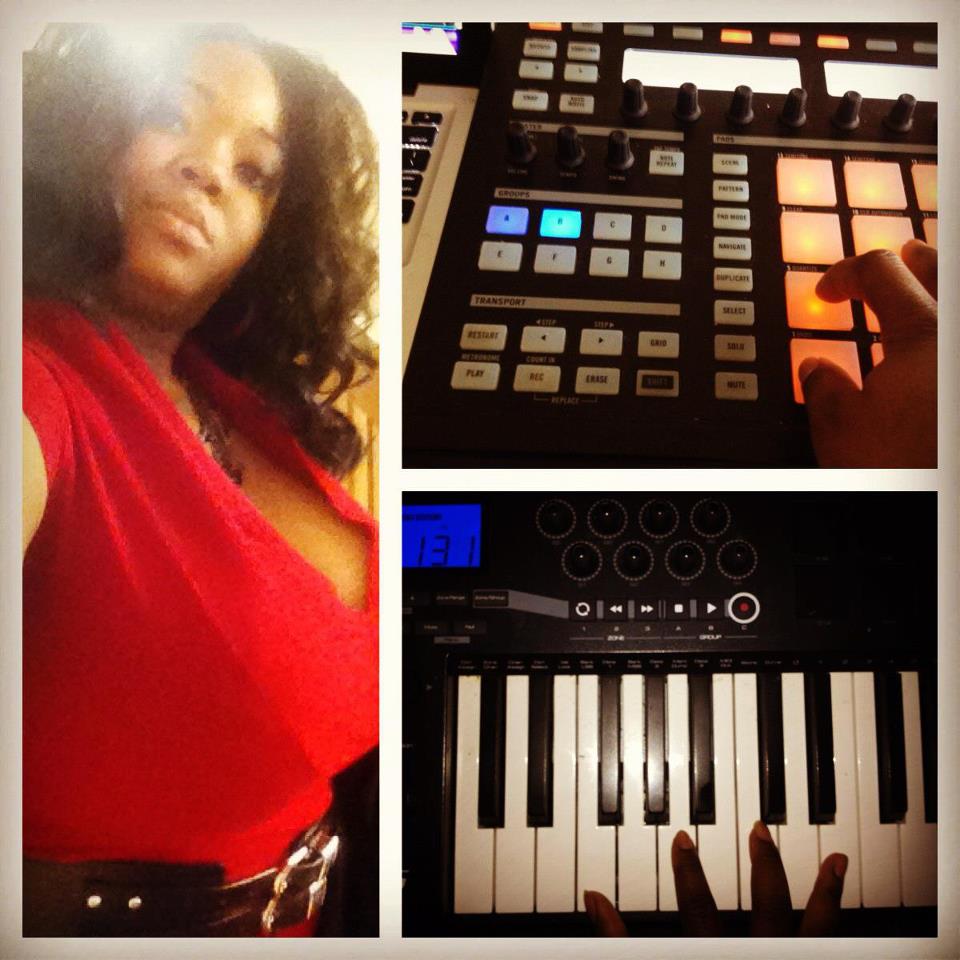

Achickwitbeatz presents the Instrumental Intel podcast, bringing you information instrumental to your artistic career including music industry news & tips, insights & interviews, and beats for your inspiration. Listen on Saturdays at 7 pm EST on Grander Radio and Achickwitbeatz.com.
Follow on Facebook, Instagram, Twitter, YouTube Audiomack & SoundCloud, and subscribe on your favorite podcast platform. Download the Grander Media app to listen to Grander Radio on the go.


- Art
- Independent Labels
- Internet Radio
- Music Documentaries
- Album Reviews
- Music History
- Music Industry News
- Free Game Friday
- Free Downloads
- Poetry
- Books
- Interviews
- Did You See It?!
- Hip Hop History
- Hear Here
- Music News
- Hip Hop Documentaries
- Music Marvels Radio Show
- Think Piece Thursday
- Mini Documentaries
- Instrumental Intel
- Music Humor
- Indie Analysis
- Conversations & Quotables
- Music
- Resources for Artists
- Podcasts
- Beats/Instrumentals
- Music Education
00:01
Hey, thank you so much for tuning in to Instrumental Intel. I am your host, music producer Achickwitbeatz, and I'm glad that you're here with me. Today's special episode is Inside the Studio: Insights from the Producer's Perspective.
00:13
And this is just part one, highlighting some conversations that I've had with producers Sandstorm McDowell and The Orkastra. So I'm excited to be bringing this episode to you. Before I go ahead and get started, I got to give a shout out to my home station, Grander Radio out of Grand Rapids, Michigan. And I'm going to take a quick pause for the cause and then we'll dive right in. Hey, I'm Achickwitbeatz, multi-genre music producer and strategist to indie artists and labels. Visit achickwitbeatz.com
00:42
for resources for artists and instrumentals in various genres available for songs, vlogs, blogs, podcasts, themes, TV, film, commercials, and more. Once again, that's achickwitbeatz.com. That's A-C-H-I-C-K-W-I-T-B-E-A-T-Z.com. Let's make something happen. Thank you so much for tuning in to instrumental Intel. I am your host, music producer Achickwitbeatz.
01:09
And I'm excited, thrilled, and delighted to announce that I have in the virtual building with me today, Sandstorm. I mean, he's a creator of many talents. Yeah, it's even hard to kind of break down everything that you do. It'd probably be easier to say what you don't do, but if you could, know, give the people a little bit of background as to who you are and how you started your music journey. All right. Name is Sandstorm McDowell. First off, I want to say it's an honor to be on here.
01:39
to join with you and just talk music. I feel like we do this all the time. Yes. Absolutely. Yeah. my background, pretty much I do anything and everything in music, what catches my ear. I started off, well, let me take it back even further.
02:05
My music, the first time I really experienced music uh actually was through my mom. And she kind of cultivated me in a way where I really loved uh orchestrated and classical music. uh I didn't know that there was anything outside of that, except for, you know, we live in Kalamazoo and back then, you know, in the early nineties, we didn't have like, uh
02:32
1560 at the time. So it was really just kind of like rock and roll and all that other stuff, stuff that I wasn't really into. uh So I really stuck with classical music and thought that was amazing. um It wasn't until I was about six or seven, uh a mutual friend of ours, my cousin, uh actually we were uh on a trip. It was for our church. We were on a trip ah to, I believe Cedar Point.
03:00
And he was listening to music. I was listening to music. He's like, hey, you want to listen to what I got real quick? And I was like, yeah. I was like, you can listen to what I have. So I was banging some Tchaikovsky. I remember this, like it was yesterday. I was banging some Tchaikovsky and he hands me his. like, was Busta Rhymes, woo-ha. And that like,
03:29
blew my, I was like, what is this? I've never heard anything like this. Like these guys are saying words, you know, he's rapping fast and everything. Woo ha. And I'm like, like the music and the melody. And I'm like, I've never heard anything. And he's looking at me like, yeah, you like that, don't you? Why can I envision that look?
03:57
So fast forwarding, when I turned 13, between those two times, I absolutely fell in love with music, tried to figure out all the different types of styles of music and everything. oh My parents were both really into the 80s and the 70s and stuff, so I got a lot uh of their inspiration oh into the thoughts and the mindset of how music should go and how it plays. oh When I turned 13,
04:27
Remember less like it was yesterday too. I was at my dad's house and my nephew was living with him at the time and he's downstairs and he's just cranking on stuff. Just I can hear the keyboard to the computer just clack clack clack clack clack clack clack. I'm like, man, what is he doing down there? And I go down there and he's on a computer program and he's just making music. And I'm like, what is this?
04:56
And he's like, he's like, bro, it's, called a fruity loops. And, uh, I'm like, are you making, are you making like your own music on that? And he's like, yeah, I was like, where did you get this stuff from? He's like, well, actually it came in a CD, a demo version came in the CD and a fruity loops box. And I was like, what? Like, how come I've never gotten this? that really started the day of like me getting into music.
05:25
Um, and you know, just like everybody, when they start making beats or whatever, you know, they're terrible. There's some of the worst things that you could, you go back now and you're like real cringe about it. But, um, you know, when you first started, like you had so much pride in it. Like you wanted to show like, look what I did. I made these beats, you know? Um, and that kind of, that kind of inspired trying to come up with like, okay, I really want to do this.
05:55
What is my name gonna be? Like, it can't just be a regular name because no rapper or producer uses regular names like that unless they're really, really popular like that. Unless they got like a cool name, you know? So I was like, so I started off and originally my, it wasn't Sandstorm, I started off with DJ Sandbox. And I thought, you know, okay, like I'm like a kid playing in the sand, you know?
06:25
playing in the sandbox with the melodies and stuff like that. like, I really like doing this. But as I grew into the making of beats and producing, I was like, the more mature my music sounds, like, the more mature I feel like my name has to. So that transition from being sandbox eventually became Sandstorm. uh And yeah, I've been making...
06:54
beats ever since I was 13. Wow, that's incredible. And you know, very dope name, by the way, I understand what you mean about the growth. And yeah, you can actually kind of hear it in the transition of the name itself. Yeah, appreciate it. Yeah. But to have been doing it at such an early age, that's really impressive. I know you had mentioned Bust the Rhymes and of course, your cousin Orchestra. um Yeah, who are some of your other
07:24
I guess, big musical influences, like whether it other producers or... Oh, man. There's like... So, as I've grown into music, I've understood that there's like certain people or like certain points in your life where you like kind of gravitate towards certain things that like work as inspiration. um So, you know, my cousin, Mr. Wonderful, he...
07:53
he was making music before I was making music. So to even hear him, was just like, oh my gosh. So during that earlier time, and then my nephew who goes by Ket Kashes was a huge inspiration. Buss was the whole reason why I wanted to rap on top of that. And this was during the time where most people
08:23
most people who are in the game, either they were rappers or they were producers. Like you didn't really have too many of those really kind of mixing in like that. And if you did, they weren't really like in your face like that. You know what I mean? Yeah. So when Kanye came out during that time and he was rapping and producing, I'm like, you can do that. Like you can have two jobs at once and do what you like. So.
08:53
ah He was a big influence early on, just Blaze because of the way that he ah kind of mixed up his samples. ah One of the popular ones, uh his groups, ah is the Heatmakers, uh know, with Kameron and Jewels. They really worked with the orchestra stuff. So, like, I never wanted to really copy their style, but just to, like,
09:23
get an ear for like, how would you kind of go about turning this orchestra music into a hip hop joint or, you know, rocking in that way. um My biggest inspiration is there's two of them. And I will say this to this day, there are two goats. There are two goats at the game uh and everybody's great. Don't get me wrong. Dre is great. J Dilla like, oh there's
09:52
great greats out there. Alchemist is fire. But there's two people, well two group, a group and a person. uh I'm like, man, like they changed the game in such a way. Is the Neptunes, not just for Ro, but the Neptunes as group, uh they completely changed the game from how they started to where they got to when even till now and, and Timbaland like,
10:21
those but to this day you know like when I listen to one in a million and people are listening to me I'm like the craziest thing is this man took took a whole cricket sample and made high ass off of that and people are like what you're like yeah listen to that that's those are crickets and they're like dang those are crickets and he got the airplanes that is an airplane like the the stuff that he would come up with
10:51
both of them that would come up with that were like, I guess like nerdish, you know, like the nerdy style of trying to do something a little quirky with your beats really was something that I gravitated because I am myself uh am really nerdy and to make music too. So. Oh, so like you kind of have to be, oh you know, there's a lot of technical stuff involved in it as well.
11:19
Not just the feeling, but like to actually carry it out and execute it. Yes. Yeah. So I'm a fellow nerd or weirdo too. So I get what you mean by that. And you know, I think that's why though, because when you think about every producer, well, so I'll say this first. There's a difference between a person who makes beats and a producer. You know, a person who makes beats typically will only stick to their genre or what they know. They don't.
11:48
like to expand out any further than that uh because that takes experimentation. uh And sometimes either you can get lost in that experimentation or you can learn something that you never did. But usually people who make beats stay in that one round. Yeah. Producers are nerds, like straight through and through. It doesn't really, the background of it doesn't really have to translate to anything like
12:16
nerd dumb, you know what I mean? But everybody has their own piece. you know, even looking at, know, Pharrell and Chad are perfect examples. they have a lot of the Star Trek, you know, that was their whole thing. The Star Trek background, the Star Wars, like video game, like all of that was kind of, you could see it pour through into their music.
12:45
And it was almost, and I guess I can speak, and I'm sure this is the same with you too, is like the experiences and the things that you go through, you want to have them come across in a melodic way. where a rapper will talk about stuff that they've been, well, most of them, the real rappers back then, would talk about stuff that they've experienced or that they've witnessed or went through. We do it.
13:15
in the same way, just in a musical sense. Yeah. I've never thought about it like that, but you're right. Wow. So yeah. Okay. Well, speaking of that, what does your creative process look like when you get ready to sit down and produce? Oh man. So I take two forms. Form one and form two, if you will. So form one.
13:41
ah If we're talking about something from scratch, like I have nothing in mind, I come up with anything ah that was like floating through my head. ah Like I said, I'm a nerd. like most of my, most of my inspirations will come through, actually come through experiences of video games that I've played. ah whether it's like a serious tone game or like a horror game or a racing game, you know, like
14:10
whatever I just got done playing or whatever is my passion and playing video games since this is where my mindset is going. So it's almost like creating a soundtrack that I created myself for a game. And so when I step in, it's like, okay, I always do drums last, but percussion usually becomes before like,
14:38
the actual drum piece for me. um I'll think of like, okay, what's like one of the most like dopest exciting moments that I had in a video game. Okay, okay, that's it right there. That's what I wanna convey. Cause I want somebody to see like when they sit down, usually, I'll say this on the side. Usually if somebody is listening to your beats um as a producer, they always try and attach it.
15:08
to a rapper oh that they either know or whether it's now or old school. uh So me, naturally, I don't think of like, like who would be dope for this moment in time in this video game? It's more like, okay, how does this melody vibe with what I'm going through at this point in time? ah
15:36
And so when I have the melody laid out, um everything's established, I do it like a game of Tetris. ah So like, you know, say I'm, let's think of an easy one, a Grand Theft Auto for everybody that, you know, can understand the popular video game, Grand Theft Auto. And I'm walking down the street and my guy is kind of, you know, he's kind of got that rock in him, like,
16:04
Okay, he's got a little bit of rhythm to him. You know, what city does this take place in? Okay, this is on the west coast. So he's gonna need that boom-boom, you know, like a good like heavy vibe to just kind of cater to his walk. oh Now starts the Tetris piece. Okay, I got the main lead part. Okay, that sounds good. Now what's gonna be in the background of that? That's gonna kind of mesh well with the melody. Okay, I got that.
16:32
Now, is there anything else that I could put in here, sneak in here on you that you, like you hear, but you don't really hear it. Cause you're too busy listening to like the melody or the lead part. Okay. I got that. Now it's time to slide in the hats to give you a little feeling. Okay. Now you've got your walk in you. Okay. But now you want that heavy, that heavy, just that one time kick that boom, you know? Um, and so that's, that's really how I go about the, go about the process.
17:02
But that's only uh one side. Now the other side is completely different. And that is when I already have a uh melody or a beat in mind. uh So another thing about producers, which I love, because I know Achickwitbeatz does this too. We've vibed before.
17:30
I know and Mr. Wonderful has done it. oh Every producer in the past that I've been around does it. You catch a melody, whether it was from an outside source or somewhere in your head, and you like, yeah, I got that. And you rewind it and rewind it in your head. You already added the beat. You're like, yeah, yeah, ooh, that would be fire.
18:00
And you can see it in a producer's face because they get that like, I'm thinking about life moment, you know, like, oh, yeah, I'll be right back, you know. So being in having moving into that spot, it really is a it's a faster process, but it's a faster process with more mistakes. um
18:27
And the reason why I say that is because originally when you have it in your head, like, oh, the melody may have sounded good with the piano and you're like, oh, like when it actually you actually transition and put it in with the piano, sometimes you're like, nah, it wasn't a piano. That's not what I was thinking. Like I thought it was that way, but it don't it don't sound like it don't sound like how I actually want it. oh So then you move to another.
18:56
another uh sound um and then you're like, oh, nah, that's not what I was thinking either. So you like, you know what? All right, let me just leave this here. Let me move on to the other pieces that I know if I if I can create the shape of it, then I can really work out the details of how this is supposed to go. And sometimes when you get the shape, you like, dang, I didn't like that before.
19:26
It's actually dope now. That's exactly what I was thinking. Other times you're like, ooh, okay. Okay. Now that I got this now, maybe it was just if I just turn this and tweet this, add a little reverb. Okay. Yep. That's what I was thinking it was going to be. So yeah, they're, they're two different, they're two different attacks. Um, two different styles. I say with the second style, I tend not to try and
19:56
go outside the box of what I was thinking, as opposed to the first style, I'll try something way different. But in trying something way different, most of the time it works out on the first style, where on the second style, I just, I'm trying to get what I envisioned. So it has a lot more mistakes to it. Yeah, I feel that. First of all, let me say that first way is incredibly dope. uh Yeah, what a way to... uh
20:26
you know, kind of compose, like you said, the soundtrack, if you will, that's really dope. And to be able to draw inspiration like that from video games is just phenomenal. And um also with the second way, I know that there's been a few times to where um something might pop up in my head and I think, oh, like, I remember it. So this is kind of like early starting out. And then, you know, there's a few times where I didn't.
20:50
So now it's like you get those moments where you might be in the car and all of sudden using notes to record. Like I know I probably look crazy to anybody next to me at the light. Like, what is she doing? Just beatboxing into the phone. Yes. And you know, like I think technology because we didn't have that even in like the, you know, the early 2000s where you could just simply be like, you know, like it.
21:17
you would annoy your friends because you'd be like, you know, all the way until you got home, like, don't talk to me. Like, OK, but like, are you really going to do that? Yes, this is going to be fire. Trust me. But I have to remember it because as soon as I forget it, I'm to be mad. And 90 percent of the time, somebody would just one question will mess up the whole your whole thought. And you'd be like, dang, I can't even remember what I did.
21:45
Yeah. So just to have technology at hand and be beatbox and you know, I'll even say this, because you can't always beatbox the whole thing that you thought of, you like, you got to break it into parts. Yes. for custom parts. Yes. No, it looks crazy to outsiders that don't know what you're doing. Like what in the world? Right.
22:13
Yes. So, okay. You know, you talked about your background in music and how you kind of developed into production. Can we talk a little bit about how you got to actually writing and performing as well? Oh, man. So...
22:31
Wow, this is a funny story. oh So uh I started off writing because I had another cousin um down in Atlanta. Shout outs um to Tre Vito, who's the co-host on my podcast. was the rapper, you know, uh and I was the producer. we've gotten to the point, speaking today, that like,
23:00
every kind of major move that we make, we talk amongst each other about making those moves. ah And that's just kind of the building of the relationship. But back then, I was producer, he was the writer, and eventually he was like, hey, like...
23:20
I know this, but you don't know this yet. Like you're making beats, but part of you is actually rapping in your head about how these songs should go, you know? And I was like, dang, like, can he, can he read my mind? Like, you know, and so I started off and you know, just the same way with beats. was, I was absolutely terrible. uh But
23:50
When I started getting going into writing, uh we were actually like doing a making a little movement and it got my friends together to start doing the same thing. uh And eventually we had a group, I think it was 16. We had a group uh known as DRC, the Do Rag Clan. And we like, we
24:20
We had a whole bunch of songs uh and it was just, it was great. um When, and I realized that I actually liked writing. So I'll say this as a side. When I was the writer, um my stage name was Dust Rider. D-U-S-T-R-Y-D-E-R. And when I was producer, it was Sandstorm. um
24:49
Eventually, I had a sit down uh with my godbrother and he was like, listen, he's like, it's cool that you want to rap. He's like, he was like, your logic, I see your logic. Like if you go further and one, this is what you're to be named as. And if you go further than the other one, that's what you're going to be named as. He's like, but for simplicity purposes, why not just be one name? And so he was like, but sit down and think about which name you really want to be. And.
25:18
Obviously it ended up translating to sandstorm. ah But we, man, we, we rapped. ah We had a whole bunch of people in a rap. And actually my rapping trickled over into um church. Cause I, at the time I was doing, ah I was doing church as well. They had just started a rap ministry. ah And so I was rapping and producing for church. ah
25:48
That has, I've seen like the fruits of that evolve over time uh to the point where now uh it's actually been really amazing is that uh I was once the new person, like the new student in the rap ministry. Now for my church, the ministry leader. oh So now uh not only do I get to perform and do all that other stuff, which is fun.
26:18
I actually get to teach other kids about the rap history, how to rap, you know, so they can be able to take those and be able to, you know, minister or rap how they want to, as well as the beats. So the writing, and between that time, the writing has never really stopped. Like, you know, we have producers, we have, we get producer block.
26:47
You know, like it happens from time to time. um the good thing about being a producer and a writer is that sometimes when you're a producer, you make way more more music than you do writing. So then when you start having blocks like that, you're like, OK, well, maybe I can just go back and start writing to some of this stuff. And so when you're so as I'm writing,
27:16
Like I've never really had a block. Yeah, maybe I might write the same line for a song that I wrote, you know, for the last song. But like what rapper has not done that? What rapper has not taken, uh you know, a Mike Jones line and said it about 50 times on, you know, 10 different tracks. So, but yeah, just the writing style for me too.
27:47
has been really interesting and I'll say interesting in this way is because rap continues to evolve, right? How rappers rapped in the early 90s is different than the late 90s is different than the early 2000s, which is different than the 2010s and even now, like all the styles are different. oh You don't, the...
28:12
To me, the popular misconception is that you always have to stay with whatever is trending at this point in time, and that's never true. um However you rap, and actually I learned this uh from uh Methamin, however you rap, regardless of how the beat drops, regardless of how it's laid out,
28:39
You can still spit fire the same way you spat it 10, 20, 50 years ago. It's about what, it's about how you convey those words, how you lay down whatever lesson or whatever story or, know, whatever punch lines you're trying to tell. That's the most important thing. It may not necessarily always be about your cadence and being up to date. Right. Right. Especially since you mentioned Method Man. I mean, he was dope.
29:08
back in the day, but like, even listen to his current stuff and, you know, how he's challenging himself lyrically. Like, you know, when he said he was going to stop using curse words just to step his bars up. And I'm like, yeah, you know, that's kind of interesting because, you know, sometimes we do kind of use stuff like that as a crutch. Yeah. But yeah, the fact that he's still growing and challenging himself and just continuously evolving. Yeah, that's a really great point. He brought up a great person to make that point. Yeah. You know, I heard him like,
29:37
I want to say it was like last week or two weeks ago. I didn't realize that he was doing some sort of freestyle battle. And I'm like, what? I'm like, man, doing a freestyle, he must be rapping against somebody old. And like, he was rapping against, you know, a current current generation rapper. couldn't even it don't even matter who it was because he killed him. But like, but like he was going in and I'm like, these are enough bars. But like this guy is snapping right now. Like and Meph already bought
30:06
has always been a snapper, but like the way his cadence went, it was still current. Like it didn't, it didn't change between how he was rapping back in the day with Wu-Tang to now. Like it's still the same cadence, but the words he was conveying in that was like, okay, like that's confirmation. Like you can do what you want to do regardless of the times. Right.
30:35
Right. And hip hop is the only genre that age change. Yeah, like I'm really hoping that that changes. I mean, rap, I should say. But yeah, I mean, with hip hop turning 50 uh last year, makes sense that some of these styles have changed and evolved. just because uh there are new people coming underneath, it doesn't mean that some of us that were there from like the early days, you know, we still want to listen to it like. Right.
31:04
Yeah, my husband and I went to the Rock the Bells concert that was in Detroit. And I mean, just seeing those acts there was just phenomenal. That place was packed. Everybody was having a good time. And yeah, like, you know, just because we older don't mean that we stop loving the music. So, yeah. Super facts. Yeah, absolutely. I'll put this too. Just as an extra thought is that
31:34
oh The music today, uh I'm not, to be honest, I'm not the hugest on it. Not that it's bad or anything like that. My interest just kind of wanes with it. the thing that I always keep in mind is that just because how the producers produce today, and I'm not talking about the process, but the sound and the way the beats are and everything doesn't make old
32:04
styles irrelevant. And I think, you know, come in, if I had to talk to anybody who's like just getting into the game, if you were really listening to, you know, Pac or something like that, whoever your inspiration is, and you wanted to make beats, but you feel a little discouraged because those aren't the typical styles that you hear these days. Like, I just want to encourage you to push that. Like, because
32:34
One thing that I've learned is that regardless of what's trending now, there's always room for every style. And some of the most, you know, the people that I listen to now, I guess you can kind of call them inspirations, but not necessarily. I just really like, you know, what they've been putting out. So there's actually two of them.
33:02
that are really big with me. Technically there's three. um There is uh Sango. um So this guy came out of uh Grand Rapids, Michigan a while back and he now resides in Seattle. um His style, if you listen to his regular stuff, like his latest uh mixtape, I think it's called Great Lake Effect or something like that, which is catered to us.
33:31
Michianders, you can definitely tell he's very much Midwest. But if you go back before that, or even that, I would even say the last four to five mixtapes or albums before that, producer, by the way, they're all that Brazilian, like trap style. uh And that is something like, like, wow, like some of those beats just goes like,
33:59
Stupid hard to the point where it's like, man, I kind of want to try that. I don't want to bite, but I kind of want to try that just to get the experience of being able to come up with a style like that. um then there's another guy, he's overseas, uh amazing kid, uh 26 years old. His name, he goes by the name Sam Gallatry. um If you, if you,
34:25
Get a chance. Kate Trinada, if any of you guys know who that is, Kate Trinada is doing a show in Chicago, I believe September, it's either September 4th or September 9th. If you get tickets to that, definitely keep your eyes and your ears open, because Sam Gallatry is also supposed to be a part of that show. And this guy, his style,
34:54
um He has that nerd-um in him too, but his style for his first couple episodes, or episodes, his first couple um albums and mixtapes were about uh experiences of nature. um And he would make those into beats and stuff like that. But now his flow, his transition to an experimental, uh I call it English pop, because it's not necessarily like, you know, the American style.
35:23
Yeah. But some of the stuff that he comes up with, uh like the perfect song is like assumptions. He's just started like using his voice on songs. And I'm like, bro, you should have been singing a long time ago. You should have been making hooks a long, time ago. um But both of, but his style is kind of, it's not, it is of today, but it's not, you know what I mean? Like it's
35:51
It has echoes of today's stuff, but you can really tell that he listened to a lot of like early 90s American style, like techno and stuff like that to really get that pump going that makes you like, yeah, okay, yeah, you know? So yeah, so I say all that to say, if you're a new producer or you're a producer just starting or a producer coming back into the game,
36:21
Don't get discouraged about the high hat sequences. Don't get discouraged about uh the, what is the style called? The uh drill style. If you want to try that, it's perfectly great to experiment. But if that's not something that you can do, don't be discouraged. Stick to what you know and evolve your own style. That was excellent advice. Thank you so much for sharing that.
36:50
Since the clock is staring us in the face, I already know, gotta have you back again. This has been great. Thank you for taking time out of your busy schedule. But I want to make sure that before we close this out, that everybody knows where they can follow you. You can check out your podcast and all the stuff that you got going. Yeah. So you can follow me. I am on Instagram as Sandstorm McDowell. oh
37:19
Make sure you go follow that. Twitter as well. I think the Deacon is in front of it. So it may be Deacon Sandstorm McDowell. Also, we have a podcast every Saturday. If you want to see us nerd out, we talk anywhere from video games to the animes to TV shows to movies to music. Like we talk about everything under the sun. It is called The Sandstorm Show.
37:46
but it is under Sandstorm McDowell as well. uh MCD-O-W-E-L-L for anybody who wants to get that spelling. ah And yeah, just follow us along. ah Just come along for the ride. We do giveaways, all that fun stuff. But it's really about the interaction. We love interacting with our fans and our subscribers and stuff. So yeah, come on through, check us out.
38:12
Thank you so much for joining me for instrumental Intel. I am your host, music producer, Achickwitbeatz. And I'm excited to say that I have in the virtual building with me today, a man of many talents and also many names. But the one we're going to call in today is The Orkastra. How are you feeling? I'm good. Good. I'm glad to be here. Glad to be invited to the conversation. Yeah. So if you could maybe give people a little bit of background and to...
38:39
some of the stuff that you do music related and how you got started in music to begin with.
38:46
Okay, that's kind of the story. Let's see. Really, I've always enjoyed hip-hop music, especially the percussion of hip-hop music. Like when I was a kid, I always wanted to be a drummer, but my mom would let me be a drummer, so... So I couldn't be a drummer. But when I got to undergrad at Michigan State,
39:16
One of my classmates who was in the travel through program with me, his younger brother was producing music. So I just basically kind of took it up on myself to figure it out with him. But he really didn't give me any training at all, to be honest. His mantra was like, if you're going to be dope.
39:42
then I shouldn't have to tell you. I should have to tell you. If you go to the suite, then you go to the suite. So basically he showed me what a quarter measure was and what a note was. And that was pretty much it. Showing me kind of the basics of how to go through the instrumentation and write this and that. But it was up to me to figure out like...
40:11
where to put the notes, where to put the rests and all that. So that's what I did. That's how I got started. Basically, I just sat and basically taught myself how to figure it out. And he really was up against, honestly, that I was going to be good. So we would constantly, we would have these beat battles where.
40:35
He would write like verses like instrumentation and then I would write the drums and like he would also write his own. So it would be like basically like his drums were spot on the same song and we would play it for our suitemates, our roommates and we would see like his drums came out on top. know like it was better basically like a coke taste test, you know. I'll consistently consistently be better than that.
41:05
So that's the only reason he started taking me seriously. Because he had to. Because people would say my drums were better. So that's how I ended up writing music basically. I just started writing drums and from there I started writing both songs and doing everything. I guess hip hop music would be especially for people that really enjoy writing for everything.
41:35
really isn't anything I don't like writing for. I guess I've never really sat down and tried to write a country song. But I don't think that it's impossible. I just find it like interesting just to put different sounds together, maybe making things that people aren't expecting. Okay. So basically you sat down, you had a point to prove, you proved it and just kept proving it.
42:02
Right, yeah, yeah. So then, you know, eventually we would just have straight up beat valves where, you know, like, I would write something and like we would designate what instruments to use. So I would tell him, like, use your horns, strings, oboe, and electric guitar or whatever. And so you would have to use those instruments to create something. And then like...
42:31
Again, just send it out to people. right, the song is back. This one or this one. Okay. So yeah, you mentioned that you don't have any problem venturing into the, or I should say out of the norm, if you will. And so I know countries kind of doing its little thing where it's getting a little more mainstream and whatnot. So is that something you can see yourself probably trying in the near future?
42:57
Yeah, I think so. I think definitely it's kind of coming back to Black. Like it started out with Black people kind of coming back to Black people now with a lot of the popular music that's out right now. So I definitely think that it's a time where you could experiment with more of those sounds from country music and integrate them into even other styles and genres. And people will probably connect with it because...
43:27
It's more like people are just getting used to those sounds, ears and sounds, more of those sounds because they're not used to them. If you're not used to listening to that type of music, you know. Yeah. So I guess when you decide to try something that's kind of out of the usual or something different from hip hop, are you able to stick to it? Because I know for myself personally, I might sit down and say, OK, I'm about to make a pop song.
43:53
But then somehow for me, it just turns into something else. So how do you make sure that you stick with what you set out to do when you, I guess, start a beat to begin with? Well, I guess it's not, like when I'm, I think me getting direction actually really helps me focus a lot. Which is why I prefer to like work with artists directly on projects because they give you,
44:18
their visions, you know what I mean? And then you can kind of fill it out and make it more vibrant. So like if I have someone say, okay, I want a country sounding song, blah, blah, blah. And so then I can go in and say, okay, so what's that type of sound I'm looking for? Like this type of sound and we go over some songs and...
44:40
make some notes on some songs, what type of sound that you're really interested in, and then that really will focus what I'm gonna do. And I'll be very excited to do that part, to go in and really mess with it. it's not, I don't find it hard at all to focus and stick to the plan. But I know what you mean though, because sometimes you may be in there and you may hear a couple sounds and...
45:07
that you weren't counting on and then it kind of goes off and goes sideways. But when I'm working with somebody that rarely happens, but when it's kind of free-fall and we're just making something, then of course it can happen. We may be sitting there and we may be trying to make something kind of gangster and then all of a sudden it's kind of an R &B song just because like...
45:33
Maybe someone heard something on the drums, wanted to slow it down, whatever, and then it kind of turns into something different. Yeah. Yeah. OK. So you mentioned that you had an affection for hip hop to begin with. Who were some of your early musical influences, even if it's outside of hip hop, but as a kid, who were some of the people that just kind of grabbed your attention first?
45:56
I mean, I guess like listening to music when I was younger, it was a lot of like Motown, because I'm from Detroit. it was a lot of like OJs and Anita Baker and Temptations and Al Green, all that kind of stuff. Real soulful type music, which I learned to love.
46:26
But I was, like I said, was always into really into the percussion. So like when I would get drum solos and stuff like that, like that's what really drive me to like want to listen more. So when hip hop music became really popular, like in the 80s, like I can remember like Will Smith's Summertime and NWA, 100 Miles of Running.
46:55
Two short freaking tales. Just a lot of different stuff that you were hearing. Like, wow, where did that come from? Even Pete Rock and why am I missing his name? We were just talking about this group the other day when we were here. uh
47:24
I know you mentioned like 2Live crew. Some of the people, know, were probably too young to be listening to at the time. Oh my gosh, yes. I'll go look at 2Live. I used to love that. It's so much energy. Yeah. You we never heard that type of bass before. That issue. Oh my goodness. I used to love watching that on the block. And then there was, there's a lot of West Coast stuff too.
47:52
like that, the Dr Dre, that was live, right? I just love that song. When I heard that, it was just nothing like, know, like the way those keys were put together, was just so unique. Yeah. Yeah, there was just a lot, a lot of, pretty much anything that had a great beat to it, that's I was into. Okay. That first Eric Bidey album, when I was a little bit older, that was...
48:20
were super different the way that the R &B was based on a of hip-hop beats. Yeah, yeah. I feel like there was a lot of fusion back then, but I guess technically there still is today, but I still feel like there's a little more crossover, but at the time, sometimes the R &B songs felt more hip-hop, sometimes the hip-hop songs felt a little more R &B, but like you could still tell there was a difference.
48:50
but they still blended together so well, a little bit more than I'd say today. Yeah, I feel like today, man, there's just a lot of content and you really have to weed through it to find good stuff. And I still put together mixtapes, so I'm in the process of doing one right now. And that is the key right now. Like I made now a little...
49:16
shoot, I may download 350 songs, you know, and go through and sift through, listen to all of them, more than once, you know, just sift it through, seeing like what actually works, and then kind of mentally kind of putting them where they would go in the mix, you know. But you have to go through so many songs to like find like, so out of the 350, like I may end up with like a hundred, you know, like that.
49:44
that are actually going to actually make that fit, that work, that people enjoy. It's not just feeling. You try to really get your songs and try to put them together to where it makes sense to the listener. But yeah, right now, there's just a lot of stuff. And you may have a great song here, a great song there, this song here, this song there, and then all around that maybe a third terrible song.
50:14
Yeah, for sure. And I was just reading an article recently that was talking about Spotify and basically how they're kind of conditioning people to just kind of sit back for more of the passive listening, like making it a little bit harder to find like specific songs. And that eventually that that could just change the way people consume music altogether. What do you think about that?
50:38
Yeah, I think that that would be a travesty really because not everybody can do music. I think that it's so accessible right now and people think that they can do it, really shouldn't be doing it. Because I'm not trying to say to anybody, why don't you say it like, not everybody can write good music, know? So, and not everybody can sing, not everybody can rap.
51:06
You know, it really is an art that you have to work hard at. in order to perfect it, even if you have talent, you still have to find the talent and get to a place where it's usable and people understand and feel where you're coming from. There's really a feeling and it's really part of the soul. So when you're just doing it just to...
51:30
to get some money or because you think this is the easiest way to get to where you want to go. Like that's not why people make music. Right. You when you listen to some of these old jams, like those people weren't just trying to make millions of dollars. They were trying to make a few of something. Yeah. Yeah. And so you have to get music that has feeling. You know, that's where that's really where real artists go, you know, right to the feel.
51:59
want this to feel a certain way. It's art, you know. And so when you're talking about how people consume over Spotify, really they aren't giving the art a chance to breathe. know, like sometimes you can't, you have to look at something like you have to be so artful. And it may impress you a certain way, but then you come back and you look at it in different light. Maybe it's, you know, at dawn or at dusk and it looks a little bit different.
52:26
I miss this, I miss that. It takes time to consume it properly. So you can't just listen and skip through every song and say, oh, this is garbage. This is great. You have to kind of let it breathe a little bit. Like open a bottle of red wine, have to let it breathe a little bit. It's going to taste different. Over time, you better breathe. So you have to give, especially when you know that it's a quality art. You have to let it breathe a little bit, like, OK.
52:56
You're gonna see what this is like, you're gonna take this in, and then you're think about it come back. And maybe we'll listen to it in a different setting to see how we feel about it. That's how music was meant to be taken in by the opinions. don't just skip through, skip through, skip through. It was okay, I guess. Right. Right. As a matter of fact, just had this conversation with you guys in the sandstorm.
53:24
when we were at your place actually, because it was a particular artist that I didn't necessarily dislike, but I wasn't really running to listen to her music. However, on the way, like on the highway, all of a sudden it felt different from sitting at my laptop, you know, trying to, you know, mix stuff and then maybe taking a little break to listen to music. It hit a lot different on the highway. It kind of got me hyped up and revved up. So you brought up a very valid point.
53:51
lot of times it depends on your mindset, the situation, and it can feel totally different. Right, right. It really, think the car is a great place to listen to music. Yeah. Especially like if you're trying to hear something for the first, second, third time, because you can actually focus on it pretty well. Yeah. Because like we're kind of adapt to listening to music in the car. And a lot of times you're in there by yourself, so you can listen to a lot of things you want to.
54:17
You can have windows down, you know what I mean? Like you can really kind of get in a zone to just listen and pay attention to the music. So, and plus usually the sound systems and car sound things are pretty good. you can get a good feel for how that's going to feel. like people will listen to certain things, of course, like when they're getting ready to go out or getting ready to go to the gym or getting ready to go to school or work. So it's like.
54:45
You know, okay, well, know I'm gonna get hyped on this. I'm gonna put this on. It's gonna get me in mood. And you had it just then, just jumping in the car. car is a great place. I car test everything. Mixed tape, I car test the whole thing before I put it out. Any beats, like I car test the beat before it's done. It has to work in the car, has to.
55:08
If it doesn't work in the car, you have to go back to your fixer. Yeah, yeah. As a matter of fact, was doing some social listening online and people were talking about how some of these songs that are out now seem to be catering more to like your AirPods or whatever, because they think that that's how people are consuming it, where, you might not get the same feeling that you get when you listen to it in the car. So again, I think you raise another very valid point, because, I mean,
55:36
Like you said, that's really the best place to just kind of absorb it and actually like feel it. Right. I mean, like here, you know, at my house for sure, we have a great sound system because we do music. So you'll be able to put it on and turn it up here. But I don't know how many people are really doing that now. Yeah. It may just be like you said, like headphones and earphones, but I feel like if you.
56:03
write the song, level it correctly for the car, it's going to sound great in any case. Exactly. Like if it sounds good in the car, it's going to sound good in everything. Yeah. You don't even have to worry about it. But I think a lot of times we're going for big sound too, you know, like, and I don't know, like, how many producers are really trying to go for like a quiet, quiet sound. Yeah. Which would.
56:29
I guess, lends itself more to like AirPods. When I'm thinking music, you want some sound, want that. You want to fill that thing up. Right. So that you really need some speakers for. AirPods and headphones, like they'll work. But you really want hearing some speakers. Yeah, absolutely.
56:55
So, right, know, time's kind of running low a little bit, and I want to make sure that people get to know where they can follow you and keep up with you, do what you got going on, hitch up if they want beats or a mixtape or whatever it is. Where can they follow you? Where can they follow me? I guess they could probably follow me on Instagram. They got The Orkastra on Instagram, I'll to check.
57:33
And also, since most of the audience listening are artists in some way, shape, form, or fashion, any advice you have to anybody that's basically trying to navigate the industry right now, maybe, you know, they're feeling a little discouraged because it seems like
57:50
not necessarily true art is kind of being honored. Like you said, people just kind of want to breeze through stuff quickly. Any advice you have to offer for them to push through that? Yeah, I think that it's important that everybody had their own style because it's only one you. So you have to develop your own style. Don't just copy somebody else and put your own standpoint. Like develop what you do. oh
58:17
go in there and figure out like what moves you and make your own arrangements. Like I do it this way because this is what I like. I put it this way because this and that and third. Not just because Swoots Beats did it, Templewood did it, UKP Merit did it. You know, like figure out what it is that you like to do. know, like every real big producer, you can tell like who it is. You know, like.
58:44
listen to it. Like you say, oh, okay, that's that's kind of okay. That's in the keys. You know what I mean? Like you, oh, that's high 10. You know, you know, who it is just based on the sound. Yeah. So you have to develop your own sound so that people understand who you are. That's wisdom right there. All right. Did you find your socials? Oh, yeah. Yes. It's The Orkastra. T H A underscore.
59:13
O-R-K-A-S-T-R-A. On Instagram. All right. Perfect. Well, I want to thank you for taking time out of your busy schedule. And I feel like we only scratched the surface. So I hope this is just part one and I get to have you back soon for part two. Yeah, that'd be fun. That'd be fun. All right. Thank you so much. No problem. Thank you. All right. And that's a wrap for this episode of Instrumental Intel. I've been your host, music producer, Achickwitbeatz.
59:41
I want to thank you for tuning in. Once again, as always, I appreciate the guests for coming on and sharing their insights. And I'd like to thank my home station, Grander Radio out of Grand Rapids, Michigan. Make sure you come back next week. I got more goodness lined up for you. So, till next time, you know where to find me. Tune in, tell a friend, and I'll see you then. Peace.


![Hear Here: Achickwitbeatz - Dopamine & Serotonin [Single]](https://images.squarespace-cdn.com/content/v1/52b0b90ae4b0293bfed0d692/1710852808557-EZYGFDIBHLBSIRFOVS1Q/Dopamine+%26+Serotonin.JPG)





![Hear Here: Dagga Man- "Analytics" [Prod. by Achickwitbeatz]](https://images.squarespace-cdn.com/content/v1/52b0b90ae4b0293bfed0d692/1584638158548-9R55AZLWZIDFJC8LATV6/IMG_2212.JPG)






![Making Music on a Budget [Infographic]](https://images.squarespace-cdn.com/content/v1/52b0b90ae4b0293bfed0d692/1582844361438-3JTE5NT3EL51FHXC0WJI/making-music-on_1929722%25281%2529.jpg)

Via Nylon Trax: Achickwitbeatz returns to Nylon Trax with “Show Me.” The Kalamazoo, Michigan producer, songwriter, and vocalist has always had a way of bringing her own musical language to house music — soulful without being predictable, electronic without losing its humanity, and always grounded in groove. | Visit Achickwitbeatz.com for your instrumental needs & dope stuff for music lovers.