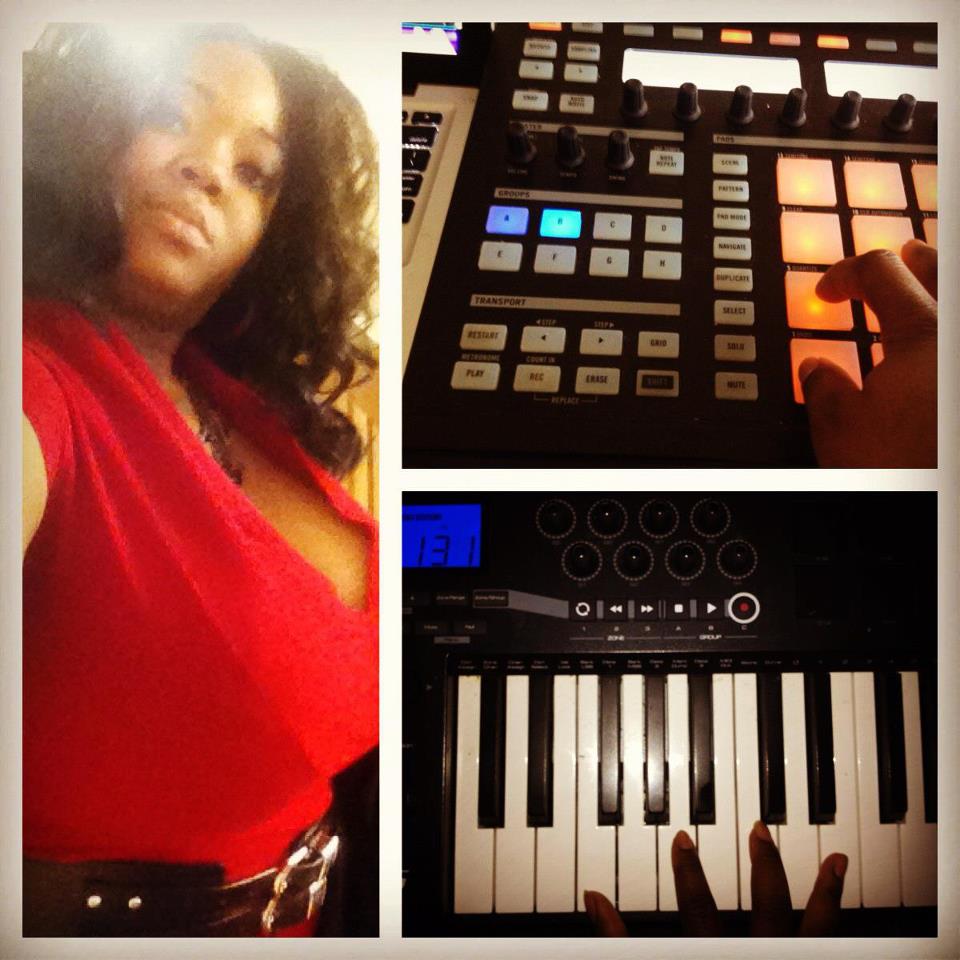

Achickwitbeatz presents the Instrumental Intel podcast, bringing you information instrumental to your artistic career including music industry news & tips, insights & interviews, and beats for your inspiration. Listen on Saturdays at 7 pm EST on Grander Radio and Achickwitbeatz.com.
Follow on Facebook, Instagram, Twitter, YouTube Audiomack & SoundCloud, and subscribe on your favorite podcast platform. Download the Grander Media app to listen to Grander Radio on the go.


- Art
- Independent Labels
- Internet Radio
- Music Documentaries
- Album Reviews
- Music History
- Music Industry News
- Free Game Friday
- Free Downloads
- Poetry
- Books
- Interviews
- Did You See It?!
- Hip Hop History
- Hear Here
- Music News
- Hip Hop Documentaries
- Music Marvels Radio Show
- Think Piece Thursday
- Mini Documentaries
- Instrumental Intel
- Music Humor
- Indie Analysis
- Conversations & Quotables
- Music
- Resources for Artists
- Podcasts
- Beats/Instrumentals
- Music Education
00:00
Hey, thank you so much for tuning in to Instrumental Intel. I'm your host, music producer, Achickwitbeatz. And I'm so glad that you've joined me. Today's episode has music industry news, beats by me for your inspiration. And later I'll be joined by my special guest, Öykü Doğan. We're gonna talk a little bit about creating music that reflects the artist, not the algorithm. So I'm excited to be bringing this episode to you. And before I go ahead and drop that first beat, I gotta give a shout out to my home station, Grander Radio out of Grand Rapids, Michigan. And with that,
00:30
Let's go!
[BEAT BREAK]
14:44
I’m music producer Achickwitbeatz back with the music biz brief. First up, TikTok Radio relaunched through a partnership with iHeartMedia, now airing on the iHeartRadio app and 28 stations across the US. The station blends trending music with creator-led segments and live conversations along with the new TikTok podcast network, featuring shows from popular creators following its previous run on SiriusXM.
15:09
The antitrust trial against Live Nation resumed in New York with more than 30 states continuing the case after rejecting a proposed settlement with the U.S. Department of Justice. While the DOJ deal would have allowed Live Nation to keep Ticketmaster with some business changes and $280 million set aside for damages, state attorneys general argue that it doesn't go far enough to address competition concerns and they're moving forward with the lawsuit.
15:34
The U.S. recorded music industry generated $11.5 billion in wholesale revenue last year, up 3.1% from the year before. Streaming accounted for 82% of total revenue. What's interesting, though, is that U.S. vinyl sales surpassed $1 billion last year. And this was the 19th consecutive year of growth, with nearly 47 million units sold, up 9.3% from the previous year.
16:00
So Vinyl is still outperforming other legacy formats like CDs and downloads, even with prices rising. Independent distribution platform, Too Lost, secured a nine-figure investment round led by Gold State Music and TA Associates. The funds will support artist advances, catalog acquisitions, and platform development as the company expands globally. Too Lost generated over $100 million in revenue last year and serves more than 450,000 users.
16:28
It will be led by its founders, who remain majority shareholders. The American Association of Independent Music has launched a new STAR certification program to recognize indie artists who don't meet traditional RIAA thresholds. The system awards one, two, and three star certifications at 50,000, 100,000, and 300,000 units, giving independent acts a benchmark for success based on streaming and sales. Since launching, dozens of releases have been certified,
16:58
offer an indie artist new validation and leverage within the industry. And it is important to note that if you qualify for any of those and you want that certification, you can also purchase the plaque. And finally, a man from North Carolina pleaded guilty in a landmark AI-based streaming fraud case after generating hundreds of thousands of AI songs and using bots to stream them billions of times. His game siphoned more than $8 million in royalties away from legitimate artists and rights holders.
17:27
He now faces up to 5 years in prison, making this one of the most significant crackdowns on streaming fraud so far. Alright, that's a wrap for the music biz brief. I'm gonna take a quick pause for the cause, and then I'll be right back with my special guest, Öykü Doğan, right after this. Keep it locked!
[BEAT BREAK]
33:42
Hey, I'm Achickwitbeatz, multi-genre music producer and strategist to indie artists and labels. Visit achickwitbeatz.com for resources for artists and instrumentals in various genres available for songs, vlogs, blogs, podcasts, themes, TV, film, commercials, and more. Once again, that's achickwitbeatz.com. That's A-C-H-I-C-K-W-I-T-
34:08
B-E-A-T-Z.com. Let's make something happen. Thank you so much for tuning in to Instrumental Intel. I'm your host, music producer, Achickwitbeatz, and I'm excited to say that I have back with me in the virtual building again, Öykü Doğan, I mean, multi-talented, multi-hyphenate artist, producer, singer, songwriter, educator. I mean, she does so many things, but I'm sure I'm leaving out something. So if you could,
34:37
just take a moment and let people know a little bit about who you are and how you got involved with music. Well, thank you so much for that amazing introduction. I really appreciate it. And thanks for having me again. It's always a pleasure for me. So yeah, I'm a singer, songwriter, and composer, jazz pianist, and also
35:07
mainly a vocal coach, but music educator. And the whole thing started when I was very little. So music is basically my whole life. And I wouldn't be exaggerating when I tell that. Um, yeah, right now my whole career is, let's say, half of my career is me as an artist, singer, songwriter.
35:36
And the other half is me teaching and coaching. Um So yeah, this is now, I'm also officially a freelancer. I'm really very happy about that. So thank you. Thank you so much. So yeah, that's basically the summary of it. All right. And so,
36:04
I know that this is not your first time on the show, and some people may be familiar with some of the stuff, but for the new listeners, if you could maybe mention some of your musical influences. I know you had a pretty eclectic mix the last time that we talked, but yeah, if you could share like some of those early influences for your musical style. Yeah, of course. Of course. Yeah, the thing is, when I was little, I started with classical piano.
36:34
And at the same time, of course, I loved the 90s, early 2000s music. And then I was at a children's choir. And then I moved to Italy from Turkey, which was my home country. And then I started um studying jazz as well as modern vocal, as well as classical composition.
37:02
So I always had this variety, but also when I listen to music, my playlists are incredibly confusing. And that's why also in my music I have all these different colors, different influences. Let's say I use a lot of um my main instruments together with the voice
37:31
is piano, so I love sweet melodies like oh Chopin, Eric Satie, or Bill Evans, so you can maybe hear those elements in the background with the piano and but together with that, you can hear some very loud bass or drums, and then
38:01
I love, you know, indie music, some pop music. I love rock music, even progressive rock. um So from, we're talking about Pink Floyd or about indie music, for example. I, especially in the last year, love Sufjan Stevens and
38:30
so many different artists, and I take so many different inspirations and put them together, and yeah, so many different colors and styles, but yeah, it makes sense in the end. Yeah, I think that that's part of you know, kind of what makes music feel so well-rounded, like when it's complete
38:59
you can hear that there's multiple influences instead of maybe just one style. And so like, since you mentioned that, I'd like to talk, if you wouldn't mind a little bit about Lilacs Bloom, kind of, and I understand you've got some recent recognition for it, and rightfully so. I mean, I remember the first time I heard it, I was just, wow. I mean, it's just gorgeous. It immediately kind of spoke to me.
39:26
You know, in and made me stop scrolling and everything like, oh, wow. Okay. You know, so yeah, if you could talk a little bit about, well, one, the recognition you received and maybe a little bit of the process for, uh, you know, making such beautiful music. Oh, thank you so much. Thank you, I really appreciate it. Yeah. I, I was, I'm, I was a summer finalist at the international songwriting competition.
39:55
which made me so happy. Actually, also in the past, I've been a semi-finalist at that competition more than I think, around five times. That's so awesome. I mean, I feel so lucky to be recognized like that. Like that's insane. But with this song in particular,
40:21
I was more excited than ever because it's a very personal song for me, and you know ,when I was making, creating that song, I didn't think of trying to fit any standards or fit the music industry, nothing. I just wanted to create a song the way I wanted to create it, and just release it just because I wanted to release it.
40:50
And it's a personal song because I wrote it for my parents, and it's about, you know, I moved to Italy when I was 19. So it's about being far away this whole time and those feelings, you know, and maybe there are some amazing things happening, but you always feel that you're far away from them.
41:18
We're always on the phone, I always talk to them, but it's not the same. So it's about all those feelings. There's the sweetest piano in the background with the saddest melody. So that was so, you know, I was very excited when I heard the news about being a semi-finalist, that it's been recognized as
41:45
decent songwriting. So yeah, I mean, that was the beginning also of this new era for me. In the past, of course, I tried to fit in. I tried so many different styles. I tried to do more pop, thinking that people would appreciate it more. But then
42:12
it wasn't feeling exactly like me, and so I think I recently, in the last few years, found myself much more than before got to know myself even more. I did a lot of work, and you know, let myself experiment more. So that was like the intro of this new era, so that's why it's even more special
42:41
Yeah, this is the story of Lilacs Bloom. Also, the cover image of the song is a painting of my mom's, which is like a gorgeous painting of hers. That also makes it like a collaboration with her, which makes it very special for me. That's so awesome. What you said about, you know, kind of coming into yourself instead of doing what it feels like
43:11
you know, the industry kind of pressures everyone to do. What advice would you have for somebody that might be struggling with this? Cause I feel like sometimes for artists, it kind of goes in cycles. You know, you're just going along, and especially with you getting, you know, all the accolades that you've gotten, uh, you know, with this, you know, being nominated or a semi-finalist for five times, it's easy to try to just kind of
43:38
do what you think people expect. So what advice do you have for anybody that's kind of looking to come out of their shell the way that you have?
43:47
Yeah, I think it's a very important point. When I released my first album, it was in 2013 and the music industry was completely different. Like we could, of course, release our songs and albums. There was already the digital release, and it wasn't like...
44:14
You could be an independent artist and do everything yourself. But the producers, the music industry people, still had a lot to say. And I remember that they always gave me support, complimented me, but they were always telling me things like, do more pop, do more commercial, do it, make a hit song
44:44
and then you'll be free to do whatever you want, and all these things, even though you try to not listen to them, you kinda get affected, but now everything is different. Most of the music nowadays is being discovered on TikTok, for example, or on social media in general, and so many different artists are being discovered
45:13
You know, I hear very interesting experimental things as well. Of course, they're in the big music industry with commercial music, but it's not just that anymore. There is much more power and possibility. So I would definitely suggest them to try, keep trying, but just
45:42
doing the things that they feel the most, that feels like them the most, most personal, experimental, without being scared of being judged or not understood, because nowadays the audience finds you eventually. So it's not like promoting your single to the whole world and
46:10
everyone has to like it somehow. No, you can have your niche following, audience, fans, and the algorithms, even though it's not easy, of course, help you more. So I would definitely, you know, tell them to be bold, create the whole image themselves. You know, that's also important.
46:40
their style, their colors, their imagery and everything. Um, yeah. Yeah. To be true to yourself. Like you can actually hear and see the difference. Like the whole image, the whole package just kind of comes together a little bit better than, you know, when it just doesn't quite fit. I mean, you can check all the boxes, but yeah, I love what you said about like making sure that you're showing up for yourself. Um.
47:09
Yeah. In your art, because I mean, that's actually what gives people the connection. I mean, you might nod your head or, you know, kind of hum along with lyrics, but you know, when you actually can feel that sincerity or catch that genuine vibe, like that's what makes it special and kind of stand out. Yeah. Yeah. agree. So, you know, like I said, I mean, there's tons of pressure to conform, but it's so much better when...
47:39
you get to be you. And like you said, I wholeheartedly agree that your audience will find you. And I know a lot of times people don't necessarily look at it that way. So maybe you put something out, and you get five likes, and you've seen, you know, all these celebrities or like people with a larger following get, you know, hundreds, thousands, whatever the case may be, but you still got to think about it. Like those are five real people that took time.
48:06
out of their day to tap that. You know, like, I think that a lot of times, you know, with the way that things are being forced with social media, it gives people an unfair perception of how their work is perceived. And there's so many more things to kind of, you know, take into account. And, you know, I'm saying this to myself, not just for the listeners, because, you know, sometimes you get kind of in your feelings. Like, as artists, we do tend to be sensitive.
48:34
Yeah, of course, I understand, I agree. Yeah, yeah. Like, we... Now it's easy to say all these things, and we say, be yourself, and be like, try to be experimental, and all these things. But of course, all of us, we had these doubts, and it took a lot of time and courage to be able to do all those things. And we all tend to focus on the numbers.
49:04
We see millions of streams and views on other people's posts or songs, and the,n as you sai,d maybe we post something, we get five likes, or when we reach 100 likes, we say wow I made it. Actually, yeah, as you said, I totally agree if those people were here, like 100 people in this room, complimenting
49:34
us it would be amazing it means the whole world, and also all those comments that people take the time to listen to. They send messages, and yea,h we got to focus on the things that are happening instead of saying I didn't reach a million streams. Yeah, that is very important yeah
50:04
Yeah, there's one phase that I still see every now and then, but not as frequently as I used to. But when artists would be working on something like, okay, 75 likes, and I'll drop the new single today. And it's like, okay, well, what about those of us that did like it? So I don't get to hear it just because like, I'm a fan too…I don't count? But you know, it's,
50:32
one of those things, like I get it. You want to see it, but yeah, we've got to keep in mind that there's actually a person on the other side of that heart button. Somebody that's saying, Hey, I appreciate what you do. And even if that was the only person that that song was for, that still means that it's worthwhile. And not only that, the fact that you put your heart into it and you're sharing it with the world. Like that takes a lot of courage, um, regardless of how it's actually received.
51:02
But you know, to put yourself out there like that, especially in this day and age, like that's already a victory worth celebrating. Yes. No, I totally agree with you. Yeah. Alright. And so, okay. I'd also like to talk a little bit about, you know, the coaching, the music education that you do. with your own voice. uh You really use it as an instrument. You have...
51:32
such perfect technique without losing the feeling. And I feel like that's a really hard thing to accomplish. So I don't want you to give away any trade secrets. They have to pay you for that. But what advice do you have with someone who might be struggling with that? And I'll say, you know what? Even I could take a little bit of advice because I can't sing to save my life–doesn't mean that I'm not going to do it–I'll still do it. But yeah, for those, like how do you
52:02
I guess, kind of recommend balancing, you know, not losing the emotion behind the technique or vice versa.
52:10
Um, yes, for example, when I'm teaching, what I like to focus on are the emotions. Of course, the technique is very important, and I always talk about technique, but um I tend to do it more in a hidden way. For example, I select some songs that help with those particular techniques.
52:40
while we're studying them, when the song becomes almost perfect, not perfection, but it sounding great. And they start noticing that they also are able to sing in that technique now. So that's how I like to teach it, without saying today we're going to learn how to do this technique. Because then
53:10
They, everyone, of course, it's human nature. We start analyzing everything. Like, where do I put my tongue? How am I gonna use my lips? What am I gonna do? Like, it's so complicated. How about breathing? Like, sometimes, yeah, my students tell me like, I don't know how to breathe. It becomes chaotic. So I think... m
53:37
trying to sing different songs from different artists and even trying to imitate them, but in the beginning, just in the beginning, is very useful because at the end of the day, those are all different techniques. Of course, they're artistic choices, but they all have different explanations, and so it becomes automatic to sing
54:07
in those different positions and then you can focus on the emotional side of the songs, on you know singing it without overthinking it, so that you can feel the song, you can make the other people feel it with you so instead of overthinking the technique
54:37
doing it as a whole package so that you find yourself very comfortable and you let yourself go because the voice is also very psychological if you're tense, you're stressed, you don't let yourself go, the voice is blocked, and that's the main take
55:03
Also breathing. Breathing techniques are always very important. Breathing a lot and using the diaphragm. Even the breathing exercises that they do in yoga or all these practices are helpful for singing. So they can try and do these things, almost like going to the gym,
55:32
but it's the gym for the vocals, we can call them. So that you don't have to think about how to use your body to be able to make a sound anymore. You feel good in your skin, you feel good with breathing, you're relaxed, and then the voice is free. That's how I...
56:01
That makes perfect sense. And, um, yeah, everything you mentioned, I see everything that I have been doing wrong. So thank you for that. I got my notes ready. Yeah. So, all right. I can't believe how quickly this time is going, but, I want to make sure that we know what you've got coming up, uh, down the pipeline. I also know that you mentioned, uh, doing some freelancing. So.
56:31
If you want to plug anything, you know, want people to hire you, whatever the case may be, you can do that now.
56:39
Thank you. Yes, first of all, I said, Lilacs Bloom was the beginning of this era, meaning that I've been working on a lot of new music, so an album is coming and it might be sooner than we all think, hopefully. So I'm very happy to.
57:07
announce it here together with you, and it's gonna be the most personal album I think, and I tried different things, different experimented as I've been saying so I'm very excited about that, and also, yeah if anyone is interested in trying to sing and coaching, vocal coaching
57:37
I also teach um home recording or songwriting. I help many of my students write their first songs and some of them even released their first albums now. I'm very proud of them. So I would be also very happy to help with all that. I do online lessons. So any level, any age can contact me. I will be very, very happy to
58:07
help out them
58:20
Yes, I'm everywhere. But right now, mainly, they can contact me on Instagram. It's @iamoykudogan, but my website will be soon ready. I'm working on it. So it will be OykuDogan.com. Um, I will be sharing on my social media, and you can find my songs on Spotify, Apple Music, and also on YouTube.
58:51
Um, so yeah. Amazing. All right. Well, I want to say it here now, just so that way everyone knows, make sure that you follow her, follow up with everything that she said, keep up with what she's doing. Um, such an amazing talent. And I want to thank you for taking the time out of your schedule to chat with me again. And I want to do it again soon, not so long. And that was my fault.
59:17
But yeah, I hope to be able to have you back again soon before the year is up. Now, I would love that. And thank you so much for inviting me again. It's really always a pleasure chatting with you. I will really appreciate it. Thank you. Thank you. All right. And that's a wrap for this episode. Once again, I'd like to thank you for tuning in. I'd like to thank Öykü Doğan for being my special guest and coming through and sharing her wisdom and knowledge, and experience in the industry.
59:46
And I'd also like to thank my home station, Grander Radio out of Grand Rapids, Michigan. Make sure you come back next week, I've got more goodness lined up for you. Till next time, you know where to find me. Tune in, tell a friend, and I'll see you then. Peace.


![Hear Here: Achickwitbeatz - Dopamine & Serotonin [Single]](https://images.squarespace-cdn.com/content/v1/52b0b90ae4b0293bfed0d692/1710852808557-EZYGFDIBHLBSIRFOVS1Q/Dopamine+%26+Serotonin.JPG)





![Hear Here: Dagga Man- "Analytics" [Prod. by Achickwitbeatz]](https://images.squarespace-cdn.com/content/v1/52b0b90ae4b0293bfed0d692/1584638158548-9R55AZLWZIDFJC8LATV6/IMG_2212.JPG)







![Making Music on a Budget [Infographic]](https://images.squarespace-cdn.com/content/v1/52b0b90ae4b0293bfed0d692/1582844361438-3JTE5NT3EL51FHXC0WJI/making-music-on_1929722%25281%2529.jpg)

A homage to the golden era of 1990s instrumental beat vinyl. Crafted as the perfect partner for freestyling MCs, dancers, and DJ culture. | Visit Achickwitbeatz.com for your instrumental needs & dope stuff for music lovers.