
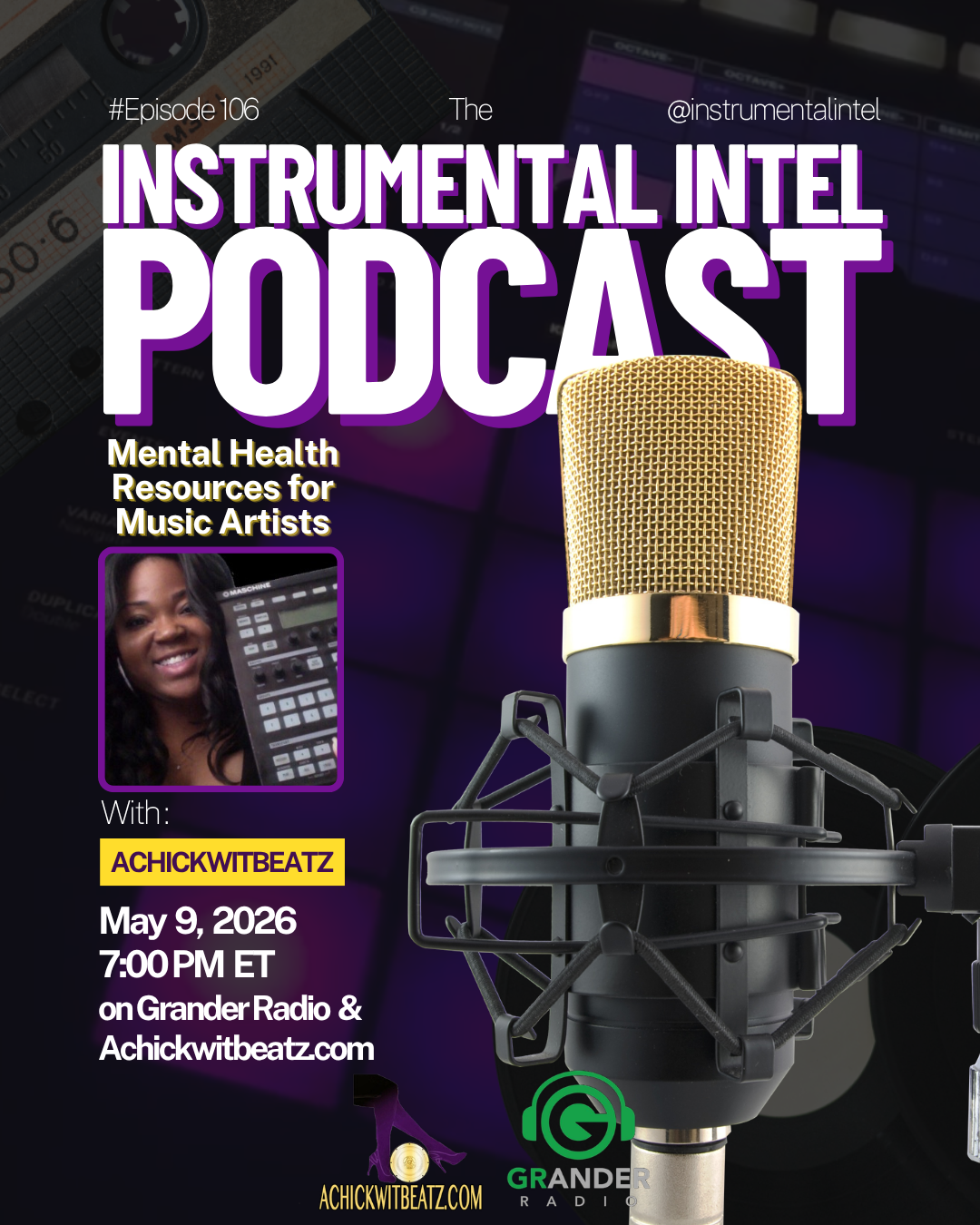
Achickwitbeatz presents the Instrumental Intel podcast, bringing you information instrumental to your artistic career including music industry news & tips, insights & interviews, and beats for your inspiration. Listen on Saturdays at 7 pm EST on Grander Radio and Achickwitbeatz.com.
Follow on Facebook, Instagram, Twitter, YouTube Audiomack & SoundCloud, and subscribe on your favorite podcast platform. Download the Grander Media app to listen to Grander Radio on the go.


- Art
- Independent Labels
- Internet Radio
- Music Documentaries
- Album Reviews
- Music History
- Music Industry News
- Free Game Friday
- Free Downloads
- Poetry
- Books
- Interviews
- Did You See It?!
- Hip Hop History
- Hear Here
- Music News
- Hip Hop Documentaries
- Music Marvels Radio Show
- Think Piece Thursday
- Mini Documentaries
- Instrumental Intel
- Music Humor
- Indie Analysis
- Conversations & Quotables
- Music
- Resources for Artists
- Podcasts
- Beats/Instrumentals
- Music Education
00:00
Hey, thank you so much for tuning in to instrumental intel. I'm your host, music producer, Chicka with Beats. I'm so glad that you've joined me. Today's episode has music industry news, beats by me for your inspiration, and later I'll share some mental health resources for music artists in honor of May being Mental Health Awareness Month. All right, so before I go ahead and drop that first beat, I gotta give a shout out to my home station, Grander Radio out of Grand Rapids, Michigan, and with that, let's go!
00:30
[BEAT BREAK]
20:37
Hey, I'm Achickwitbeatz, multi-genre music producer and strategist to indie artists and labels. Visit achickwitbeatz.com for resources for artists and instrumentals in various genres available for songs, vlogs, blogs, podcasts, themes, TV, film, commercials, and more. Once again, that's achickwitbeatz.com. That's A-C-H-I-C-K-W-I-T-B-E-A-T-Z.com. Let's make something happen.
21:07
Alright, I'm back with the Music Biz Brief. First up, Udio admitted in court filings that it scraped audio from YouTube to train its AI models and operates a paid subscription service that generates music on demand – get this – all while denying infringement in an ongoing lawsuit from Sony Music Entertainment and arguing that its use of copyrighted recordings qualifies as fair use. The case is moving forward after a judge allowed key claims to proceed
21:34
with the dispute focusing on whether training AI on scraped music without licenses – all while monetizing the output, mind you – violates copyright law. Suno has taken control of Songkick user data, including artist preferences, location data, and concert tracking history, following its acquisition of the platform from Warner Music Group late last year. Now the company is hiring a GM to integrate that data into its AI platform.
22:01
The aim is to use Songkick’s data to connect music creation with live event discovery as Suno scales its paid product and faces stalled licensing talks with major labels. Spotify won a motion to move a proposed modern payola lawsuit into arbitration after a subscriber accused the platform of misleading users by promoting songs through paid label arrangements while presenting playlists as personalized recommendations. A federal judge dismissed the case's class action claims
22:30
ruling the user had accepted Spotify's arbitration terms through continued use of the platform, meaning the dispute will now proceed privately through arbitration instead of an open court. so-called “Blue Dot Fever” highlights a growing number of arena and stadium tours with large blocks of unsold seats, alongside several recent tour cancellations and postponements from major artists. The trend has fueled broader conversations around high ticket prices, dynamic pricing, venue sizing,
22:59
and potential live event fatigue, even as Live Nation is reporting strong overall concert revenue and continued demand for top-tier tours. But let's be honest, some of these artists aren't really big enough acts that should be selling out these huge venues that they're playing to. And not only that, if you've been paying any attention to the economy, there's no way you didn't see this coming. But we can call it “Blue Dot Fever” if they want.
23:25
Alright, the Black Music Action Coalition has opened applications for the third year of its BMAC Live Accelerator program, a partnership with Live Nation focused on training and networking opportunities in live entertainment careers. The program, taking place July 13th through the 17th, will select 20 participants across fields including concert production, events, hospitality, and management as BMAC continues its broader mission of expanding access and career pathways.
23:53
for black professionals in the music industry. Applications close May 15th, and participants will be notified by June 18th. Warner Music Group generated $1.73 billion in revenue during calendar Q1 of 2026. It's up 12.1% year-over-year, with subscription streaming revenue up 12.7% to $734 million. The company benefited from streaming price increases and continued market share growth.
24:21
Warner also posted gains across recorded music and publishing, showing continued momentum for subscription-driven revenue as major labels push for higher streaming value and stronger monetization across digital music. Sony Music Entertainment and Sony Music Publishing generated a combined $3.03 billion in calendar Q1 of 2026, up 19.7% year-over-year, driven by continued streaming growth, strong physical sales, and a major surge in other income from licensing.
24:50
merch and live activity. Recorded music and publishing grew $495 million, reflecting that Sony's music business is powered by subscription streaming and diversified rights income across its catalog and frontline releases. A coalition led by the American Association of Independent Music, better known as A2IM, including groups like the Artist Rights Alliance and the Recording Academy, is opposing a proposed 43% increase in U.S. Copyright Registration fees
25:19
warning that it could price many independent creators out of the system. The groups argue that registration is essential for enforcing rights and accessing legal remedies like statutory damages, and the Copyright Claims Board, and that higher fees would hit independent artists hardest due to already limited control over streaming rates and income. Alright, that's a wrap for the Music Biz Brief. I'm gonna take a quick pause for the cause and then I'll be back with mental health resources for music artists. Keep it locked!
[BEAT BREAK]
49:17
Hey, I'm Achickwitbeatz, multi-genre music producer and strategist to indie artists and labels. Visit achickwitbeatz.com for resources for artists and instrumentals in various genres available for songs, vlogs, blogs, podcasts, themes, TV, film, commercials, and more. Once again, that's achickwitbeatz.com. That's A-C-H-I-C-K-W-I-T
49:45
B-E-A-T-Z.com. Let's make something happen. Alright, I am back with mental health resources for music artists. Dr. Chayim Newman, I hope I'm pronouncing that correctly, a clinical psychologist who works with touring artists, told Rolling Stone in early 2020 that many creatives suffer because of how destabilized their routines become on the road and in the studio.
50:09
He points out that long hours and constant movement make it hard to maintain healthy habits and relationships, not just for artists but the crews behind them, who burn out in similar ways. Dr. Newman also notes that there may be a neurological component at play. Artists, often more right-brained, may be predisposed to intense emotional states due to how the brain processes negative emotion. And when they perform, their bodies enter a state similar to panic triggered by adrenaline and pressure,
50:39
even if it's voluntary. He and psychotherapist Zach Brewer surveyed more than 1,100 touring professionals and published a paper, “Mental Health Issues Among International Touring Professionals in the Music Industry” in the Journal of Psychiatric Research. Based on the 239-question survey, they discovered that individuals in the music industry face depression, anxiety, and suicide risk at rates five to 10 times higher than the general population.
51:08
After years of focusing on mental health and live entertainment, they launched Amber Health, a company committed to supporting the well-being of “humans who make the music happen,” using science-based approaches. In 2022 alone, they offered mental health resources to over 1,900 music industry professionals with hopes to expand that reach even further. Amber Health offers a full range of mental health services tailored for the music industry.
51:35
They start by consulting with teams to understand their unique challenges, then conduct in-depth assessments to measure mental health, workplace dynamics, and risk factors. Based on that data, they design custom solutions like leadership training, group workshops, one-on-one support, and crisis management. These programs are delivered on-site or virtually, and follow-up surveys help track progress and guide future support,
52:01
all with the goal of creating healthier, more sustainable working environments behind the scenes of music. You can learn more and check out their research at amber.health. Next, Backline is a nonprofit dedicated to connecting music industry professionals and their families with mental health and wellness resources, tailored to the unique demands of this work. Their services include one-on-one case management for U.S. residents,
52:26
where trained staff create personalized care plans and referrals to vetted providers across all 50 states, many of whom understand the realities of touring and studio life. They also offer free virtual wellness sessions like yoga, sound healing, and breath work, as well as peer-led community groups for open dialogue and support. Backline's Touring Notebook and Real Talk video series help artists prepare mentally and emotionally for life on the road,
52:53
while their venue signage program spreads awareness backstage. Offering fast access to care, often within three to seven business days, they're helping reduce wait times and get people the support they need when they need it. Next up, the Entertainment Community Fund, which was formerly known as the Actors Fund, offers mental health support to anyone working in the performing arts or entertainment industry, including music, of course. Whether you're dealing with anxiety, depression,
53:20
life transitions, or career-related stress, their team of caring clinicians can help. The services include assessments, crisis counseling, referrals to ongoing care, support groups, and help navigating insurance coverage. They connect artists with mental health professionals who understand the unique pressures of the industry, and financial aid may be available to offset treatment costs. To access their service, visit the Entertainment Community Fund portal at entertainmentcommunity.org.
53:50
Next, there's Headstock, based in Manchester. It's a music and mental health social enterprise using the power of music to support mental well-being. In partnership with the mental health charity Shout, they launched Music 85258, a free, confidential 24/7 tech support service for anyone working in the music industry. If you're struggling to cope, just text MUSIC to 85258 to connect with a trained volunteer for immediate support.
54:18
And so make sure that you add MUSIC 85258 to your contacts so help is always right there within reach. Next up, MusiCares supports people in the music industry by providing critical health and welfare services focused on mental health and addiction recovery, general health care, and human services. They offer support, referrals, and financial assistance for counseling, psychiatric care, addiction treatment, and ongoing recovery programs. MusiCares also helps with medical expenses,
54:48
preventative care like dental and hearing clinics, and wellness workshops. For those facing hardship, they provide help with basic living costs such as rent, utilities, and insurance, plus programs for affordable housing, career development, legal support, and more. MusiCares serves musicians, producers, engineers, tour crews, and all others who work in music. If you or someone you know needs assistance, contact MusiCaresRelief@musicares.org
55:17
or call 800-687-4227. This is a valuable resource designed to support the music community's well-being beyond the stage. Next is Music Health Alliance, a nonprofit that helps music industry professionals and their families navigate health care and health insurance. Since 2013, they've assisted nearly 25,000 people and helped reduce over $127 million in medical costs.
55:45
Their services include support with insurance enrollment, medical bill negotiation, and access to mental health and wellness resources. They offer confidential client-focused advocacy, especially for those dealing with pre-existing conditions, financial strain from medical expenses, or gaps in coverage. The goal is to make healthcare more accessible and manageable for people working across all areas of the music industry.
56:13
Alright, and there is the Music Industry Therapist Collective. They provide confidential psychotherapy for artists, crew, and professionals across the music business from therapists with first-hand experience in the industry. Their services include individual therapy, high-end treatment centers, mental health training, and workshops for companies and organizations. They tackle issues like burnout, performance anxiety, addiction, isolation, and more, all within the context of music's unique pressures.
56:43
Their mission is to increase access to trauma-informed care, reduce stigma, and support the mental health of the music community through lived understanding, clinical expertise, and collaboration. Next, there's Music Minds Matter, based in the UK provides 24/7 mental health support for anyone in the music industry, from artists and engineers to crew and behind-the-scenes professionals. Their free, confidential helpline connects you with trained counselors who understand the unique pressures of working in music.
57:12
hey also offer guidance on therapy referrals, debt and legal advice, and tools for staying mentally well. Music Minds Matter hosts online self-care sessions on topics like managing stress, staying healthy on tour, and navigating relationships in the industry. Their goal is to make mental health support accessible to everyone in music, no matter where you are. And the final featured resource for this episode is Music’s Mental Health Fund,
57:39
a collaboration between Sweet Relief Musicians Fund and Backline that offers financial assistance to music industry professionals needing mental health support. If you already have a therapist but face financial difficulties, Sweet Relief grants help to continue your treatment. If you need help finding a therapist, Backline's case managers create a personalized mental health plan and provide grants to cover the cost of several sessions. For life-threatening and mental health emergencies, please call 911
58:08
or 988 immediately. Applications are available online, and questions can be directed to info@sweetrelief.org. A 2019 survey by Record Union found that 73% of independent musicians struggle with mental illness. So there's no shame in it. It's something that is very common. And please, please, PLEASE, if you are struggling, make sure that you take advantage of these resources.
58:34
There are other resources available as well, but these were some of the major ones that specifically help music artists. here are other resources available as well, but these were some of the major ones that specifically help music artists. But if you need help, please don't hesitate to make sure that you reach out to a qualified professional. It is so important these days. I've heard some chatter about using AI for therapy, and that is definitely not recommended. Yeah, talk to a human if you need it.
59:02
So yeah, please don't hesitate to reach out for the resources that are there. The world needs you and your music, and we need you to be healthy to continue to keep making it. If you need to recap any of these resources that I've shared, please make sure to visit Achickwitbeatz.com. I will have the transcript for this episode available. So make sure that you check it out. Episode 57.
59:30
Mental Health Resources for Music Artists and the transcript will be located right underneath all the places that you can listen to this, with links included. All right, that's a wrap for this episode of Instrumental Intel. I've been your host, music producer, Achickwitbeatz. And once again, I want to thank you for tuning in. I'd like to thank my home station, Grander Radio out of Grand Rapids, Michigan. Make sure you come back next week. I got more goodness lined up for you. So next time, you know where to find me. Tune in, tell a friend, and I'll see you then. Peace.


![Hear Here: Achickwitbeatz - Dopamine & Serotonin [Single]](https://images.squarespace-cdn.com/content/v1/52b0b90ae4b0293bfed0d692/1710852808557-EZYGFDIBHLBSIRFOVS1Q/Dopamine+%26+Serotonin.JPG)








![Hear Here: Dagga Man- "Analytics" [Prod. by Achickwitbeatz]](https://images.squarespace-cdn.com/content/v1/52b0b90ae4b0293bfed0d692/1584638158548-9R55AZLWZIDFJC8LATV6/IMG_2212.JPG)









![Making Music on a Budget [Infographic]](https://images.squarespace-cdn.com/content/v1/52b0b90ae4b0293bfed0d692/1582844361438-3JTE5NT3EL51FHXC0WJI/making-music-on_1929722%25281%2529.jpg)


A homage to the golden era of 1990s instrumental beat vinyl. Crafted as the perfect partner for freestyling MCs, dancers, and DJ culture. | Visit Achickwitbeatz.com for your instrumental needs & dope stuff for music lovers.