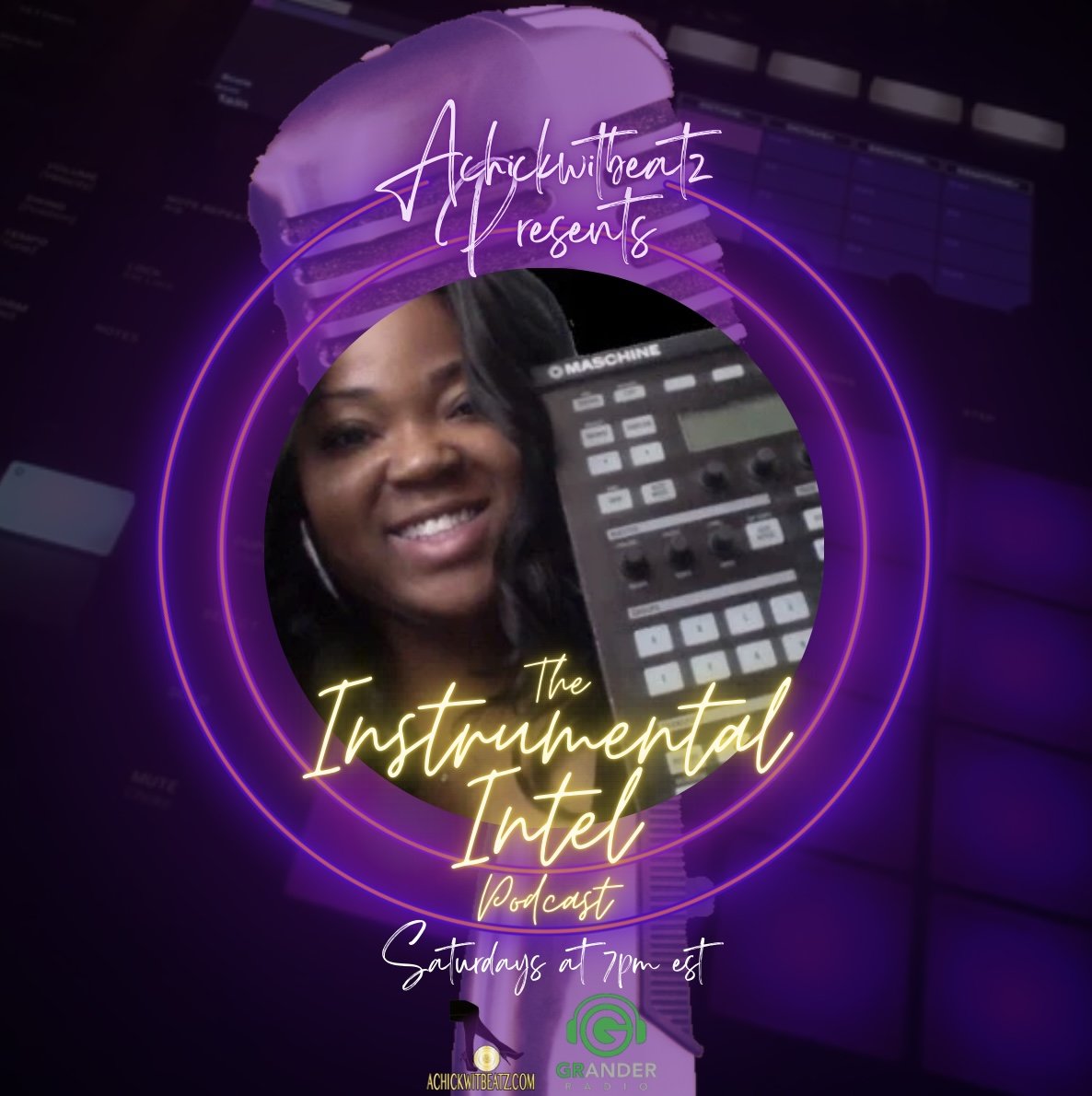
Achickwitbeatz presents the Instrumental Intel podcast, bringing you information instrumental to your artistic career including music industry news & tips, insights & interviews, and beats for your inspiration. Listen on Saturdays at 7 pm EST on Grander Radio and Achickwitbeatz.com.
Follow on Facebook, Instagram, Twitter, YouTube Audiomack & SoundCloud, and subscribe on your favorite podcast platform. Download the Grander Media app to listen to Grander Radio on the go.

- Art
- Independent Labels
- Internet Radio
- Music Documentaries
- Album Reviews
- Music History
- Music Industry News
- Free Game Friday
- Free Downloads
- Poetry
- Books
- Interviews
- Did You See It?!
- Hip Hop History
- Hear Here
- Music News
- Hip Hop Documentaries
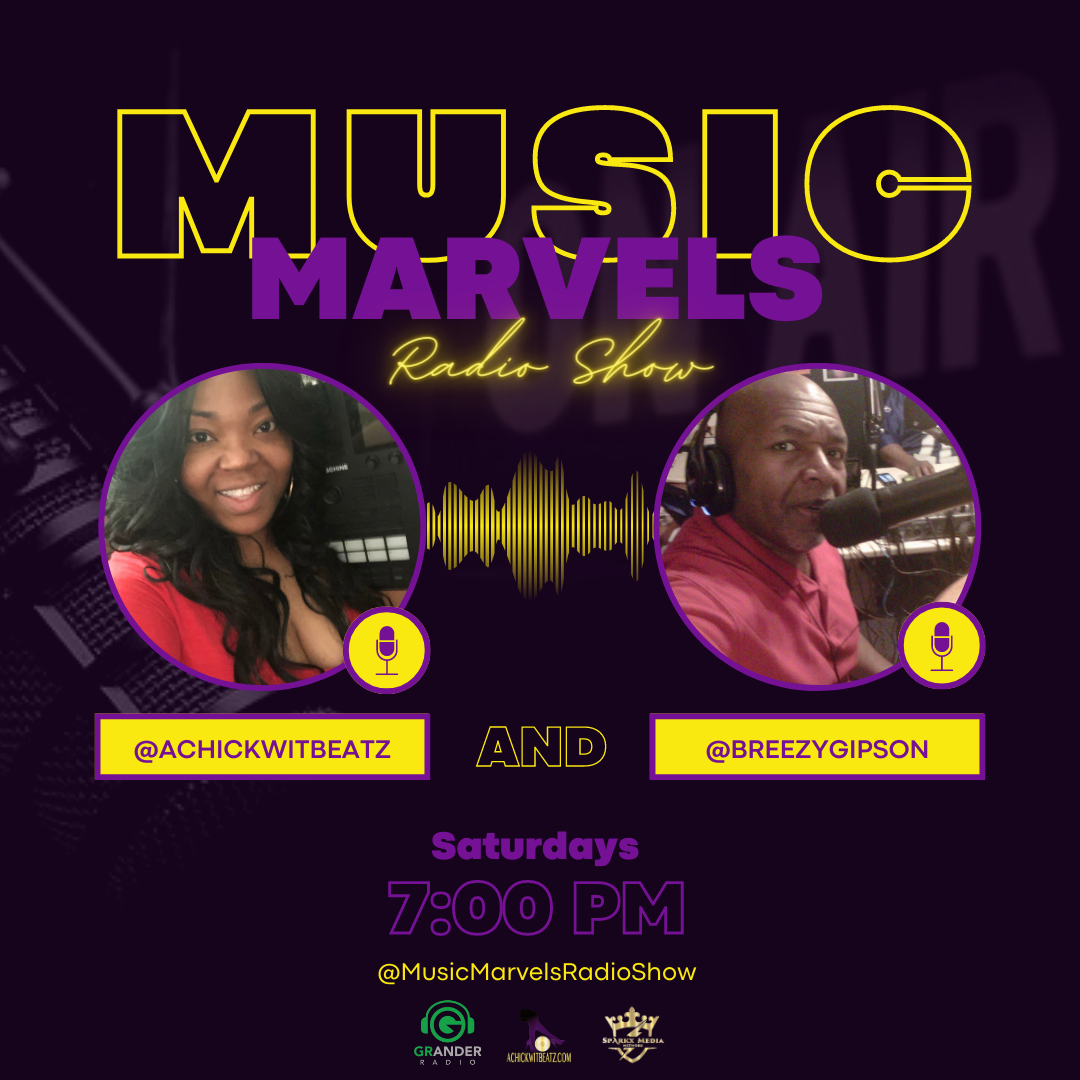
- Music Marvels Radio Show
- Think Piece Thursday
- Mini Documentaries
- Instrumental Intel
- Music Humor
- Indie Analysis
- Conversations & Quotables
- Music
- Resources for Artists
- Podcasts
- Beats/Instrumentals
- Music Education
00:00
Hey, thank you so much for tuning in to Instrumental Intel. I'm your host, music producer Achickwitbeatz. And I'm glad that you've joined me. Today's episode has music industry news, beats by me for your inspiration. And because it's mental health month, later I'll be joined by my special guests, mental health professionals, Cinqué Barlow and Phire Free. We're going to talk about mental health and the artist's experience. So I'm excited to be bringing this episode to you. And before I go ahead and drop that first beat, I got to give a shout-out to my home station.
00:29
Grander Radio out of Grand Rapids, Michigan. And with that, let's go.
[BEAT BREAK]
15:29
Alright, I'm music producer Achickwitbeatz back with the Music Biz Brief. BMG and Concord are merging, with Bertelsmann taking a 67% stake and Concord's CEO set to lead the combined company, of course, pending regulatory approval and a projected close in the second half of the year. The new business will operate across publishing and recorded music with a focus on scaling rights, tech, and global reach, highlighting ongoing consolidation and increased competition for catalogs and artist deals.
15:57
iHeart Media and SiriusXM are in early talks to merge, with Irving Azoff and Apollo Global Management advising on a potential deal that would combine major terrestrial and satellite radio platforms. The discussions are still preliminary with no guarantee of a deal, but they reflect continued pressure on traditional radio as companies look to scale and compete in an increasingly streaming-dominated audio market. Spotify reported Q1 2026 revenue of 4.53 billion euros,
16:26
which is about $5.30 billion, up 8% year over year. Premium subscribers hit 293 million, and total users reached 761 million, despite recent U.S. price increases. Growth was driven by subscriptions, while ad revenue dipped, but profitability improved sharply with operating income up 40% and net income more than tripling. Universal Music Group is selling 50% of its stake in Spotify for roughly $1.4 billion.
16:54
with proceeds going toward an expanded $1 billion share buyback program while maintaining its remaining stake. The company says artists will share in the sale proceeds, continuing its longstanding policy as Universal accesses value from its streaming equity while reinforcing investor confidence during broader market pressure. Universal reported Q1 2026 revenue of $3.39 billion, up 8.1% year-over-year, driven by growth in streaming subscriptions, physical sales, and publishing.
17:24
along with contributions from its downtown acquisition. The results reflect continued momentum in core music revenue streams, with subscription streaming leading the way as the company expands and invests across recorded music and publishing. Universal Music Group and Sony Music Entertainment want a U.S. judge to force Suno to disclose its licensing deal with Warner Music Group, arguing that it contradicts Suno's claim in its copyright lawsuit that no viable market exists for licensing music used to train AI models.
17:52
A judge has so far declined to compel disclosure, but the dispute centers on whether that Warner deal can be used as evidence that an AI training licensing market already exists. And honestly, that's a fair point. Spotify is rolling out a new Verified by Spotify badge that goes beyond profile ownership to show artist authenticity, with AI-generated or AI persona artists currently ineligible at launch. The badge will prioritize artists with real-world presence and consistent engagement.
18:21
as Spotify tightened standards around identity and transparency in response to the rapid rise of AI-generated music. Believe and TuneCore are now blocking the distribution of AI-generated tracks made on unlicensed platforms like Suno, using detection tools to identify and reject content tied to models trained on unlicensed music. At the same time, the companies are expanding partnerships with licensed AI platforms like ElevenLabs and Udio.
18:47
reinforcing a growing divide between approved and unapproved AI tools as the industry tightens control over how generative AI content is created and distributed. Alright, that's a wrap for this week's Music Biz Brief. I'm gonna take a quick pause for the cause and then I'll be back with my special guest, mental health professional, Cinqué Barlow, and Phire Free right after this. Keep it locked.
[BEAT BREAK]
21:05
Hey, I'm Achickwitbeatz, multi-genre music producer and strategist to indie artists and labels. Visit achickwitbeatz.com for resources for artists and instrumentals in various genres available for songs, vlogs, blogs, podcasts, themes, TV, film, commercials, and more. Once again, that's achickwitbeatz.com. That's A-C-H-I-C-K-W-I-T-B-E-A-T-Z.com.
21:33
Let's make something happen. Hey, thank you so much for tuning in to Instrumental Intel. I'm your host, music producer Achickwitbeatz Achickwitbeatz. And I'm thrilled to say that I have mental health professionals, Phire Free and Cinqué Barlow in the virtual building with me. And before both of you introduce yourselves, I would like to thank you for taking the time out of your busy schedules to come and share with us.
21:58
Thank you. All right. So, yeah, maybe Cinqué, you want to start with your background? Sure, sure. Oh, and first, thank you for asking me again. You're one of the few people when you ask, I can't say no. It's a short list of folks. I'm Cinqué. I'm a licensed clinical social worker, licensed in Connecticut and Massachusetts.
22:25
I live and work in Connecticut, but I also have some consulting in Massachusetts. Uh, my career has taken me through community health centers, hospitals, ah inpatient outpatient facilities. uh I was a clinical director for program that worked with corrections. I'm currently working at a community health center part-time and then working on my own private practice. uh
22:56
all demographics, all the communities, all genders, ah gender identification, people that identify in all ways, shapes and forms, all socioeconomic status. I'll just add, currently my focus has been on working with seniors in various communities. Amazing. Thank you for all that you do. Thank you.
23:26
right, Phire Free. Wow, thank you so much for having me here. I'm Phire Free. I am a writer and an artist. I have um my master's in counseling psychology for like the last 11 years. um I do work in specifically sexual assault and intimate partner violence and relationship violence. um And I like
23:54
uh I do trauma, actually I'm healing-centered. So healing-centered engagement focuses on community care and working through the community, providing resources and doing community-focused and based work or collective-focused and based work that provides and supports people in need.
24:19
And it requires a lot of educating as well as maintaining and staying educated. And I work with people from across genders and across age ranges, as well as providing like writing and, you know, self-care and self-awareness support. oh Amazing. Thank you. Thank you. So, both of you are doing some.
24:47
incredibly important work. And so, yeah, just kind of want to shout you out, you know, in those certain situations, you know, you've ever been out and maybe somebody just starts to confide in you. I know for me, it can be overwhelming. So the fact that both of you do this and still help people is just amazing. I can't imagine having that kind of capacity to be able to handle that on a massive scale the way that you both do. you. oh
25:17
uh So to kind of kick it off, you know, it's not very uncommon for artists to deal with different mental health struggles. What are some of the common mental health problems you both see creatives deal with?
25:34
I can start. it's one of the biggest things that I think that um, I have recognized with creatives is because there's so much judgment in choosing to follow the artistic and be more intuitive, which is definitely the antithesis of the culture that we live in. um We see that creative, I've seen that creatives tend to want to focus on like their heart and want to follow. m
26:02
they want to follow a more intuitive path and there's a lot of judgment behind that. So there's a lot of um almost like an adverse to the judgment, a lot of ego, a lot of issues with, you know, showing up in the room and arrogance, um try uh oftentimes making others feel small, especially when creatives are maybe feeling less confident or when confidence is shaken.
26:32
And so, or feeling like, um or just projecting onto others. There's a lot of projection. So those are some of the things that I think I've seen a lot of people dealing with. Okay. How about you, Cinqué? Yeah, just to go off of that, great way to kick this off. I see a lot of it starting with isolation. um Being isolated as...
26:59
You I think all creatives, I know we're keeping it to music, but um all creatives, when you get really deep into something hyper-focused on something passionate about whatever your task is, there's an isolation. Your world needs to get really, really small and focused. um And out of that, I often see folks struggle, initially depression, anxiety, The isolation, of course, you're trying to surround yourself with
27:29
positive folks, it um can really, if you're not comfortable in that space, it can really lead to that. And then I think Phire Free kind of, you know, the pressure, the pressure, especially for new artists, like let's, you know, we're all creative, we wanna get this thing out, but come on, money matters. And if you're just starting, um you know, to jump in and just solely do that,
27:59
you know, your creative thing. Yeah, it's what you want to do, but it's not as easy as folks make it out to be because money matters, right? And then, you know, also, if you're not dedicating 100 % of your time, you feel like you're not doing enough. But you don't want to plan B, so to speak. you know, so all that plays in folks' minds.
28:24
But I think whenever you're dedicated to whatever medium, whatever craft, whatever passion, there's an isolation factor and that can kind of bleed into uh other issues, know, aside from the depression and things like
28:43
You know, I just want to say that you touched on a lot of stuff that I've experienced, basically the same kind of way. And I don't really feel embarrassed about sharing that because, you know, it definitely is a struggle. And also, Phire Free with what you said, I've encountered other artists that way. And, you know, it's kind of negatively impacted my desire to collaborate with them because of that. yeah.
29:11
So this one is kind of a twofold. I guess we got to kind of split the fork in the road here, but I want to make sure that we cover both. But uh I'll start with saying with what you were mentioning about dealing with egos and that sort of thing. How do you think artists can kind of, uh I guess, stay confident about what they do without trying to compare themselves to their peers and other colleagues?
29:40
So um I think one of the biggest things is I've always had to um lead with, know, myself as my biggest competitor and always beat my best, right? So if I put my best out there, I'm always going to go out against my best. And that means that I'm not looking at, you know, I'm not looking at other artists and going, oh my gosh, well, they did this and I didn't. um
30:04
But what that does mean is if they did something better than me, then how can I step my game up? And that also kind of puts my, that also makes me put my ego in check. Because if I come out on my best, but I feel like somebody is blowing me out the water, or I'm not doing what I need to be doing, then that also allows me to say, okay, next time I can do it this way, or this is the approach that I can take, or I can put this into my work.
30:35
And it also allows me to maintain and keep that respect for my peers because as ah Cinqué was saying, isolation is huge. And so it doesn't help when we're looking at each other already feeling bad. And then we also have a group of people who's making us feel worse. Ah, and then now it's like, don't wanna talk to nobody. But when I'm able to say, okay, I respect you. And when I'm able to respect myself and understand how to come,
31:05
it better or put a better foot forward for myself that allows me to not look at my peers as my competition but as my collaborative partners as my cooperative partners. oh agree with that 100 percent. I think sometimes ah you get people get wrapped up in comparing measuring
31:31
particularly, you know, whether it's art, music, writing, what have you, you know, and I think that's natural. But I think also it's important for creatives to remember to kind of reframe that thinking as instead of it being a competition, it can really be a point of inspiration and motivation if you're looking at it the correct way.
31:58
You know, you're trying to create something and you see someone over there. I mean, that's not naturally competition, you know. If you try to strike up a conversation or just say, hey, that's really good. And you don't even have to verbalize or any of that. But if you can frame it in your head as, wow, they went in a direction I wasn't thinking of.
32:22
Now, even if you go in that direction, it's going to be different because you're a different individual. So I don't think it needs to necessarily be a competition. There's various ways of looking at it. You know what mean? And I like to see folks look at it more as, you know, these are my peers. Oh, wow. They're inspiring me. They're pushing me, that kind of thing. you know. OK. Now, that's excellent. Love what both of you said about that.
32:52
On the flip side of that, if you're on the receiving end of those people wanting to compete with you, are there any coping strategies for people to not isolate when they've experienced this multiple times? That's really good. Oh, I'm asking for a friend. No, I'm just kidding.
33:17
But let me think of maybe Phire has something to say. Let me think on that one. That's a good question. There's there's a lot. So to be on the receiving end, it is easy to isolate. There's there's also one of the things that I think is really important to remember is if somebody is making me feel bad, there's probably other people in the room that are not feeling that great. Right. So something that if if and this this takes.
33:43
this takes some energy, but if you have the energy for it, go and talk to some of the other people that might have been isolated. Those could be good collaborations. I mean, not to be, but I think I took what beats you and I kind of did some of that back in the day. Also kind of taking a time. A lot of times the spots happen. um Sometimes when you're just starting, might be in an open mic. So definitely connecting with other people.
34:11
Um, also remembering that a lot of people like, like work. Um, a lot of people like the work basically because either they don't have the time to make it or they just enjoy the energy or they like the vibes. So just talking to other people, there's for every one person that is hating, there's like five people that are showing love, that are giving love, um, and focusing on the love energy and on the positive energy and community is always.
34:39
always going to be way better than, you know, focusing on the haters in the room. um A lot of times too, people don't necessarily know who the hater is because the hater hasn't necessarily come to them. You know what I mean? So, um so they'll be like, oh, I love this person. And you might know differently. it's like, but like knowing that person who is loving those people, like
35:08
is cool to be cool with that person and to meet those people and to build those relationships. And then there's also the time that, you know, that is all being able to, you know, once you're out of the vulnerable space. But then there's also the aspects of understanding your own vulnerability. um I am a heavy analyzer and I'll just go ahead and say this too, um with self-reflection and taking time and uh I never
35:37
For anyone who doesn't feel like you bring a lot of ego into the space one of things that it's okay to say is maybe my work is just that good maybe I just have a hater because my work is just that valuable and when you can hold that it doesn't even matter anymore, but I Think like I think that networking is huge
36:07
uh And yeah, we want to kind of isolate at times and I think we need to at times to, you know, build our, you know, try out new things. But even for me on a personal level, you know, I was like, forget it, I'm going to do my own thing. I'm just going to, because, you know, you have feelings, feel kind of certain way, you know, about certain folks. But I noticed too, then once I put myself out there, um
36:37
There are folks who are, uh you know, at least interested in what you're doing, willing to collaborate, but you'll never know if you keep to yourself. I'm, you know, I see it in others, but I have experienced myself, you know? So, oh yeah, networking is huge. And you don't know where that's going to lead you, you know? You really don't. But it's important to do, you know, just because you meet someone doesn't mean like it's going to pop off right away.
37:05
Um, it may be later or it may never, still those contacts, connections are so key. Um, just, you know, push yourself out of your comfort zone at times. You don't have to always be out and about, but I would say at some point, you know, just, just self out there. I feel like this is kind of a natural segue to talk about social media and using it as an artist. So with points that both of you raised, that's.
37:35
a great way to kind of connect with other people, especially in different areas, if you're not traveling and whatever the case may be. But, um, Phire Free, when you mentioned focusing on the love and not the hate, I know that I personally on social media look and I see a lot of people upset or, you know, feeling disappointed when they don't get the number of reactions that they were looking for or feeling bad. But then, you know, I believe that I've shared this on the show before.
38:04
Like, let's say maybe you see some artists getting, you know, 20,000 likes, whatever the case may be, but you know, you got five. That's still five people that took the time out of their day to say, I like this. And I think that so many artists minimize that. So if you're standing in a room and you're performing and you know, five people are giving you a standing ovation, why would you pay attention to those who didn't show up? You know what I mean? Like it's.
38:34
Those numbers, feel like social media kind of makes artists feel like it's small, but when you really think about however many likes you got those people being in the room with you, patting you on the back, it's still something to celebrate. So with that being said, uh what do you think are some of the mental health risks tied to social media for artists?
38:56
I think oh a lot of times we do get into that um and you talked dopamine and serotonin. um I know that we do talk about the dopamine push and the way that social media feeds us. um But one thing that we have to remember is the algorithm loves hate. The algorithm will push hate out before it will push out love. Um, a lot of times,
39:25
if people, especially like for me, I know a lot of people are like, don't with the comments, but a lot of times when you read comments, the algorithm will show you some BS before it will show you the people who are like this and like who are coming out encouragement. So I think that's a big thing. think the biggest thing is that we don't live in social media. We live in reality.
39:52
and creating a boundary with social media is something that I'm seeing people are doing less and less. um And so as somebody that I know we are going through, we're going through a huge transition right now of getting off of and not being so deeply embedded into our technology. And I encourage everyone to embrace it uh because
40:19
Our technology, yeah, it's cool to write online. um I definitely have my preferences or to write using clouds and all the software. But there is something very powerful about being able to be in spaces with other people, being able to share those spaces, being able to share idea spaces in person.
40:46
And if that's available to you, I encourage you to do it because what you'll recognize is that a lot of people have a lot of the same challenges that you do. Some challenges look different and it's sharing those ideas are encouraging um and also being able to build those relationships because in real spaces with real people, not that people are mine are not real, but in authentic spaces where people are.
41:13
actually able to kind of live more among each other, um there's a lot of ability to kind of recognize that, this person is under this over here and I like this over there, or I like this, I like to be able to add, to make my music, know, do all the crescendo and decrescendo and all of this. And so when you realize that it's not even a competition really.
41:42
you like to do the same things, but there's different components that you like to emphasize. It becomes more about how can we make this, how can I bring out more of what you do into what I do? Or how can what you do enhance what I do? And it becomes much more complimentary than, you know, opposing, if that makes sense. It does. It does. What are your thoughts, Sinking?
42:09
Yeah, the main thing I like, is uh the main thing is the in-person piece. I think that's huge. um And that's part of, I think I mentioned before, um putting yourself out there in person um is very different. And social media has a way of, there's good things about it, but it also has a way of letting you
42:36
kind of isolate and hide behind things. And we know what we see on social media a lot of times, sometimes a lot of times, is war. It's not real. To your point, you were saying like, if you get five likes, that's good, which it is. Like think about it. I'm old, call me an old G, whatever. But you know, think about how music was done, you know, let's say 70s, 80s, when
43:05
A new band, a new group would go to a local place and play in front of 15 people, right? That's how you build up. That's how you tweak and get better at your craft. And that's how you build uh an audience, an ecosystem of folks who are into your stuff, whether it's art, music, or writing or whatever. I think if artists look at it as like, hey, I got to perfect my craft, my skills.
43:33
And then what that allows me is to kind of create my own little world. um And now social media is great at that. You can really draw folks in and have them locked into you. But it takes time. That's the thing. Time to build that with anything. And I see a lot of folks not.
43:53
wanting to be patient with that and I get it, really for any new thing it takes time to build and I don't care what you're seeing on social media with people just say quit your job and go, it doesn't work like that. Let's be real. So I think the time and effort piece um is what gets lost in this. Really look at the, I've talked to younger folks like.
44:21
look how it was done. It was an organic process. You get together, you create something, you put it out in a smaller venue, and that's just how you build. Instead of looking for that big hit, oh, two billion views or whatever you want to say, you know what I mean? It is nice now that people can get music out quickly, right? Versus back in the day. That's a fantastic thing. But...
44:50
Let's not lose, um you know, the human side of that, you know, we don't need to have cookie-cutter or everything, right? And to be original and to have an audience, to have an ecosystem, it takes time to build, you know, so. Definitely. Love the points that both of you raised. Another thing that I kind of wanted to mention while we were on the topic of social media is that
45:19
specifically with Instagram, it feels as if they're trying to push people away from likes uh for the simple fact that I know you've probably seen it's been there for a while with the friends tab. So now you get to see people that you follow the things that they're liking and, you know, just from doing social media, listening on other platforms like threads.
45:41
Now people are afraid to like things because Instagram is snitching on them. So I kind of wanted to raise the point for anybody listening that may not have been paying attention to how this shift has been happening. But just because you didn't get a like, doesn't mean that people didn't like it. They just don't want, you know, themselves exposed in ways that they don't feel that they should be. And if you notice like now they even have it on your profile where you can see your own views.
46:11
where other people might not see it with the exception of Reels, like on that main page, showing you that to let you know, like, okay, people are still interacting with this. It's still engagement. Engagement isn't going to look the way that it used to because of these changes that they've made. But there are other metrics that are more important than, you know, like counts, which is definitely a vanity metric, but yeah, I wanted to point that out for anybody that might be dealing with that kind of frustration as well. So yes.
46:41
Five people is still a lot, but maybe it was even more than that, but they don't want their friends going through scrolling and seeing everything. I actually had someone tell me once about a beat that I posted and he says, yeah, I liked it, but I didn't like it on Facebook. And I asked why I felt like that was a weird thing to admit to me.
47:02
He said, because if I liked it, it was going to show up in other people's feeds and I wanted to get it before anybody else had a chance. And I'm like, you know what? I didn't even think about it like that. yeah, it goes deeper than the likes for anybody that's kind of been using that as their main metric. Like don't tie the value of your art to the number of likes that you get. Right. I think it goes back to the in-person piece too.
47:28
That's a nice measure of social media, but come on, get out there, um do your thing live, meet up with folks. um Because I think I've seen a shift, even in the therapy realm, I've seen a shift into folks wanting to be more in person. Virtual is cool, but in person is a different thing. And it's an important thing, because it's really important for creatives.
47:56
Don't be afraid of that. That's all I can say. I love that. To piggyback off of that too, but that also goes into like, um to kind of talk about that a little bit. One of the artists that I have been able and blessed to be in connection with has um kind of created a niche and through building out, um his name is Sammy Shibbolak, and in building out that niche, he's taken
48:24
communities, um different people in different communities that have supported him. And he's kind of used that to kind of build and amplify his music. And the reason why I feel like this fits here is because as you pointed out, there's a competition piece there, right? There's a whole like, don't want everybody to know what, like this is gold. um
48:53
And so when you have an interconnected group or community that you can say, this is the piece that I kind of want you to understand, or this is what I want you to look at, that offers a different conversation and it allows you to get kind of that feedback. So that's also something that if people are struggling with that, that was a really cool and innovative way to kind of bring your
49:23
you're like fan-basing your community together to kind of offset some of that. Cause yeah, there's a lot going on. And just, want to real quick, the copycat that you kind of, copycat thing you kind of touched on. Um, I think again, that's another opportunity to look at things from a different perspective. Um, how many times have we heard, oh, this artist sounds like, or
49:52
this sounds like, this beat is like, yeah, okay, it's like, but it's not, it'll never be the same because it's, an individual thing. You know what mean? Um, I was having an argument with someone way back. Oh, this is DJ sounds like X, Y, and Z. And I'm like, yeah, but it's different as it is not the same. And I, and so there really is no room for copycat. If you think about it like that.
50:22
Yeah, can take, know, say like, okay, so for instance, I have a program I do with seniors, right? I can give that material to anyone, you know, any licensed person or anyone who wants to do it, but it's not going to be the same as mine. And that's not a bad thing. Like, each individual has their own thing to add to it, right? So I think we got to get out of this mind as they're going to steal this or, you know,
50:49
It's a copycat thing. I don't know. That's just my take on it. So definitely I've been told um, you know, oh this, your beat this sounds like so and so like, you know, they're great producers, right, but it's like but no it doesn't, it doesn't right? listen to the same kind of music but and I know you think that's a compliment but no, not really
51:17
I've heard that a few times and kind of that way. So I'm glad that you pointed that out. I love what you mentioned Phire Free about what Sammy's doing. And I feel like, you know, that's some free game tips for artists to kind of build upon. Definitely. Yeah. And so I do have to ask, I can't believe how quickly this time is winding down, but I want to make sure that we cover burnout in creative blocks for artists.
51:45
I think it's something that everyone kind of deals with from time to time. As far as creative blocks go, I heard a quote once before that said, you don't have writer's block. You just don't want to write about what you're supposed to be writing about. And I do kind of agree with that. So, uh yeah, do you guys have any tips for, you know, balance and burnout or creative blocks?
52:14
Oh, me? Sorry. I mean, burnout, again, and when I, I'm sorry, when I hear creatives, my mind doesn't go just to music, art, writing, dance. It's just in general, there's plenty of folks who aren't in those realms, who still struggle with all that we're talking about, right? So burnout,
52:42
in any field, you know when you're there, right? And it is time to take a break, a pause, you know? um And that does help a lot um as long as you get back to it. oh I think when we push and push and push, sometimes we can get through it, but then, you know, that can be detrimental. I haven't even, we haven't even touched on, you know, substance abuse with...
53:10
folks in these realms, right? And why that occurs and then what comes out of that, right? So I think it's important when you feel something, just pause and say, right, I gotta shift into something else. I don't know. oh But that's just, I don't know. That's my take on it because...
53:33
Some things you just can't push through. Some things you've got to stop, reflect, and readjust, you know? Yeah. That's ah very true. I'm sorry. Go ahead. Totally agree. um I was going to say that with burnout, one of the things that hits me is satiation. I feel the sense of satisfaction, but there still questions. There's still more. So it's like, m and that's around the time that it's like, OK, let me step back. um
54:03
with feeling blocked, I usually tend to have to change my medium to feel refreshed. uh if it's like right now, I've been heavy into crochet, but if I'm feeling annoyed with crochet, then it's time to write. And if I'm tired of writing, let me go experience the plants for a little while. Let me go touch grass. Let me go. So it's like, essentially what it is, is I look for fresh air. I don't look for when I feel like things are stale.
54:31
I look for when I want something fresh or new or exciting or just different. And so I'll change my mediums because what ends up happening is we unlock things that we didn't realize we weren't, you know, engaging with. So I think that that's always a beautiful thing to seek out where you can get some fresh air, feel inspired. Yeah. I like that fresh air. Yeah. It's a shift and uh I think we all do it.
54:59
uh Yes, some degree. Oh, I know I'll get wrapped up in a thing and I'll say, you know what, gotta do some gardening. And I think those in the creative spaces, art, music, dance, I think it's even more important to have that mind shift. Okay, yeah, this is cool, but I gotta go do something else, you know, not abandon what you're
55:27
Passion is, yeah, you do need to shift. It's a different kind of go to a different channel, I guess. I don't know. Yes. I love that. All right. Yeah. Thank you so much. I really appreciate both of you taking the time out of your schedule to share all these gems and things that artists can actually apply to kind of help themselves within their careers. And before I let either one of you go, I'd like for you to have a chance to
55:57
Let people know where they can follow you, if there's anything that you want them to check out. uh Or even if maybe it's for people within your region that could come to something that you're physically doing, whatever the case may be, I want to make sure that both of you have times to promote yourself and what you're doing. Oh, okay. Thank you. As I said, I'm licensed clinical social worker, currently doing some community work at a local uh
56:26
health clinic, hard time, but um I'll just shout out, um you know, I have my own private practice and services, support services I provide there. I'm just going to give the website, which is probably the easiest way. I'm also on IG, but the website is bestlife.services. And that'll bring you right to my site.
56:52
I'm on IG as... what am I as? I'm on IG... Oh my gosh, I'm blanking out. I always pick the wrong one. Yeah, I always... Blank it out. Wait a minute. It is...
57:13
Uh, @cinque_lcsw_licsw, as I'm licensed in Connecticut and Mass. But um, yeah, check out bestlife.services. bestlife.services that has all my services and again I, you know, I do consulting in Connecticut and Massachusetts.
57:36
Thank you for asking me to be on and I'm dead serious. There's a short list of folks I mean less than five who anytime they ask I say yes. Thank you so much for allowing me to be here, um, and you can find me at freephire.com.
58:06
You can also find and follow me on substack at Free Your Phire. I can also be – I'm on Instagram, and I'm @freephire on Instagram and I also am open. So if you are open to kind of reaching out, you can catch me on Instagram and you can also
58:36
contact me at phirefree.com. If you have any questions or inquiries. Excellent. Thank you. And I will tie the links into the transcript on the website for anybody that, you if you're driving listening to this, make sure you check it out. Click the links, please do follow them and connect with them.
59:03
And once again, I just really appreciate both of you. Yeah, this has been a great discussion, a very important discussion and thanks for sharing your wisdom. No, no problem. Thank you. you. I'll also get, when we wrap up, I'll give you my email, which is a good way to contact me, my business email and also messages on our IG will work as well. Thanks. All right. And that's a wrap for this episode of Instrumental Intel. I've been your host, music producer Achickwitbeatz.
59:31
And once again, I want to thank you for tuning in. I'd like to thank my special guests, mental health professionals, Phire Free and Cinqué Barlow for coming through and dropping those gems and sharing their wisdom. And please do make sure that you contact them, keep up with what they've got going on. I'd also like to give a shout-out to my home station, Grander Radio out of Grand Rapids, Michigan. Make sure you come back next week. I got more goodness lined up for you. So, till next time, you know where to find me. Tune in, tell a friend, and I'll see you then. Peace.


![Hear Here: Achickwitbeatz - Dopamine & Serotonin [Single]](https://images.squarespace-cdn.com/content/v1/52b0b90ae4b0293bfed0d692/1710852808557-EZYGFDIBHLBSIRFOVS1Q/Dopamine+%26+Serotonin.JPG)





![Hear Here: Dagga Man- "Analytics" [Prod. by Achickwitbeatz]](https://images.squarespace-cdn.com/content/v1/52b0b90ae4b0293bfed0d692/1584638158548-9R55AZLWZIDFJC8LATV6/IMG_2212.JPG)







![Making Music on a Budget [Infographic]](https://images.squarespace-cdn.com/content/v1/52b0b90ae4b0293bfed0d692/1582844361438-3JTE5NT3EL51FHXC0WJI/making-music-on_1929722%25281%2529.jpg)

A homage to the golden era of 1990s instrumental beat vinyl. Crafted as the perfect partner for freestyling MCs, dancers, and DJ culture. | Visit Achickwitbeatz.com for your instrumental needs & dope stuff for music lovers.