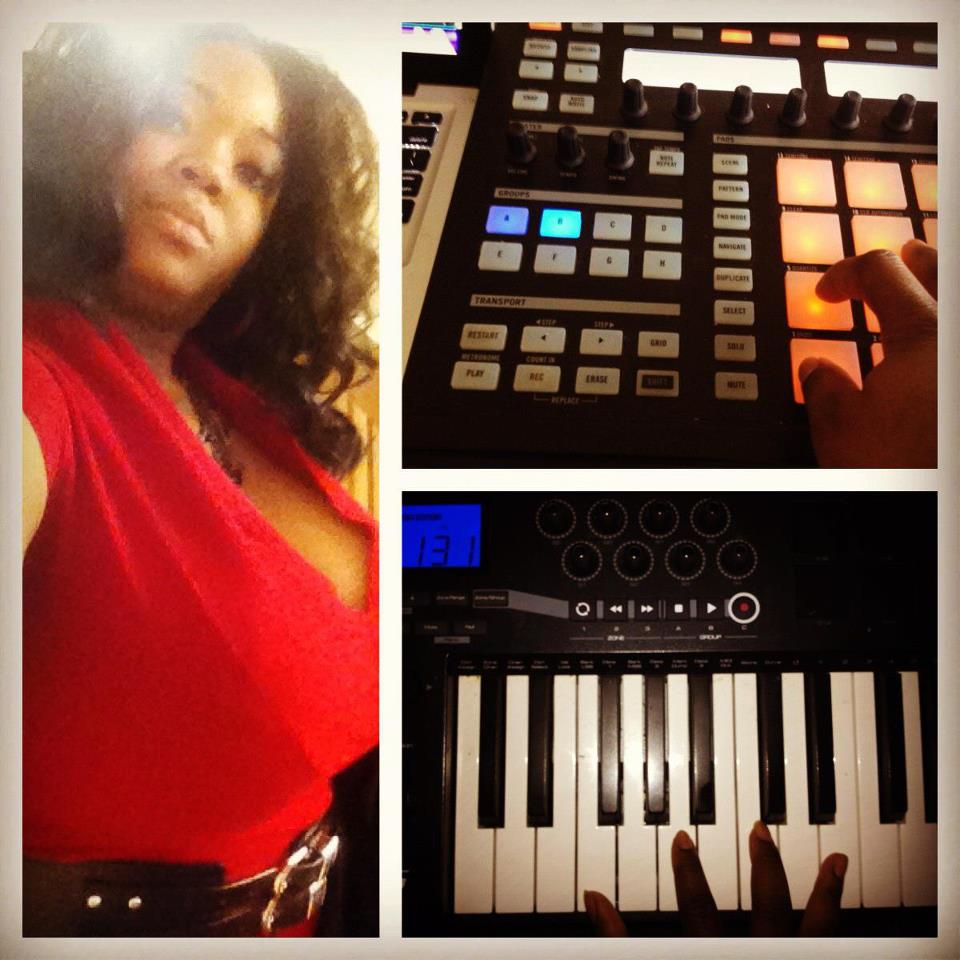

Achickwitbeatz presents the Instrumental Intel podcast, bringing you information instrumental to your artistic career including music industry news & tips, insights & interviews, and beats for your inspiration. Listen on Saturdays at 7 pm EST on Grander Radio and Achickwitbeatz.com.
Follow on Facebook, Instagram, Twitter, YouTube Audiomack & SoundCloud, and subscribe on your favorite podcast platform. Download the Grander Media app to listen to Grander Radio on the go.


- Art
- Independent Labels
- Internet Radio
- Music Documentaries
- Album Reviews
- Music History
- Music Industry News
- Free Game Friday
- Free Downloads
- Poetry
- Books
- Interviews
- Did You See It?!
- Hip Hop History
- Hear Here
- Music News
- Hip Hop Documentaries
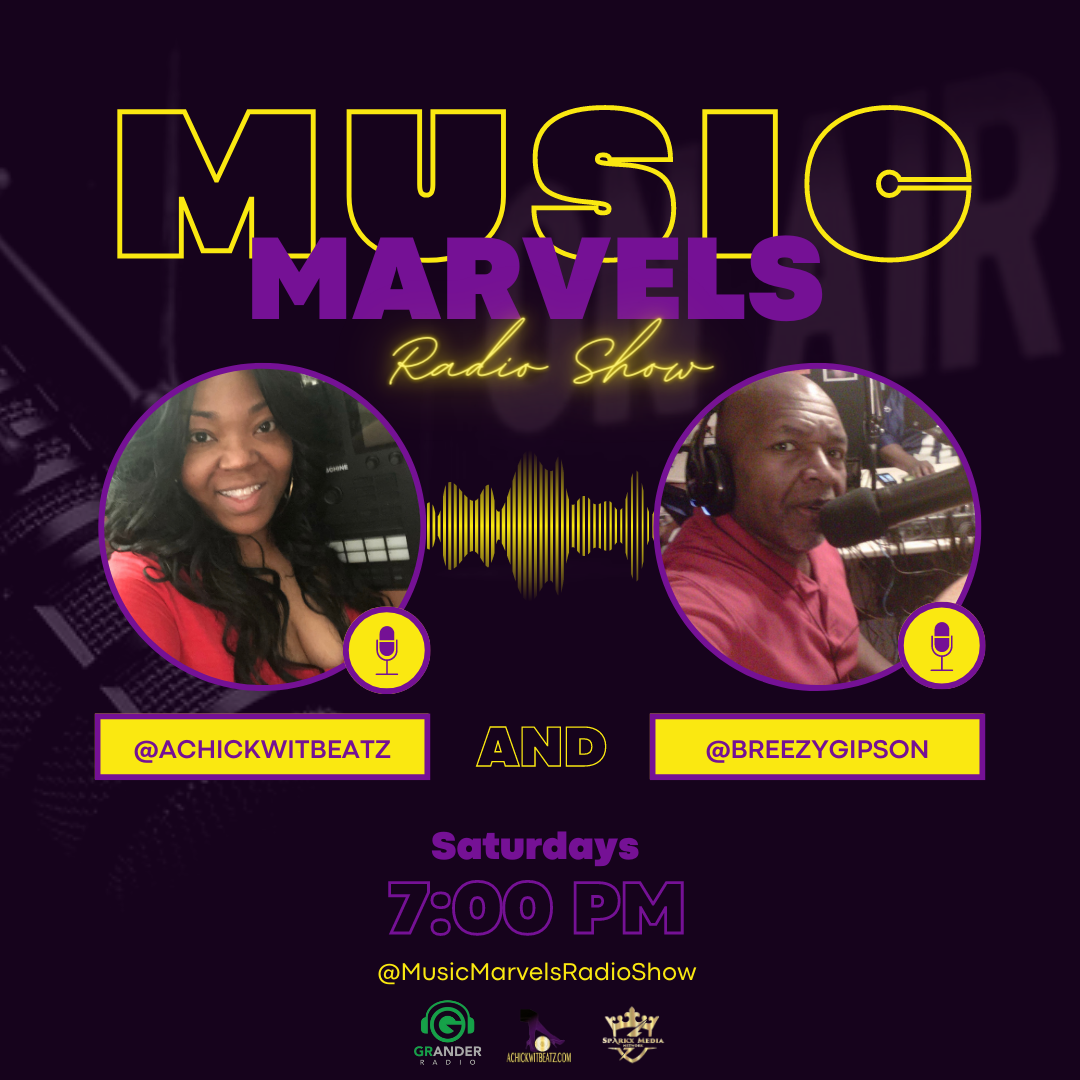
- Music Marvels Radio Show
- Think Piece Thursday
- Mini Documentaries
- Instrumental Intel
- Music Humor
- Indie Analysis
- Conversations & Quotables
- Music
- Resources for Artists
- Podcasts
- Beats/Instrumentals
- Music Education
00:00
Hey, thank you so much for tuning in to Instrumental Intel. I'm your host, music producer, Achickwitbeatz, and I'm glad that you're here with me. Today's episode has music industry news, Beats by me for your inspiration, and the hot topic for today, since it's kind of the end of the year, usually when people start planning ahead for next year, I'm gonna talk about content strategies for indie artists, basically how to repurpose across platforms without burning out, which is very important this time of year and beyond.
00:29
So I'm excited to be bringing this episode to you. And before I go ahead and drop that first beat, I gotta give a shout-out to my home station, Grander Radio out of Grand Rapids, Michigan. And with that, let's go!
[BEAT BREAK]
15:03
Hey, I'm Achickwitbeatz, multi-genre music producer and strategist to indie artists and labels. Visit achickwitbeatz.com for resources for artists and instrumentals in various genres available for songs, vlogs, blogs, podcasts, themes, TV, film, commercials, and more. Once again, that's achickwitbeatz.com. That's A-C-H-I-C-K-W-I-T-B-E-A-T-Z.com. Let's make something happen.
15:33
Alright, I am music producer Achickwitbeatz, back with the Music Biz Brief. First up, Adobe Premiere will add licensed music clips from Universal Music Group and Warner Music Group to its mobile video editing app, allowing users to search, browse, and preview popular songs and add up to 60 seconds to a video. The announcement didn't specify a participating artist or a release date, but said the feature is coming soon.
15:59
Universal Music Group's Q3, 2026 revenue was $3.09 billion, up 11.7% year-over-year, including consolidated Downtown Music Holdings results, or 5.3% year-over-year without it. The label attributes the growth to streaming revenue (which includes streaming 2.0 agreements and more ad support to streaming), strong physical sales, and more digital music publishing revenue.
16:27
Merch sales dropped 4.6% year-over-year, which Universal attributes to fewer high-profile tours than in Q3 of 2025. YouTube Music and Premium have over 150 million subscribers, including trials, adding roughly 1.3 million a month on average since March of 2025. Its parent company, Alphabet, doesn't publicly distinguish subscribers who pay for YouTube Music as a standalone versus those accessing it through YouTube Premium.
16:56
Its CFO includes both as drivers of its 11% growth in subscription, platforms, and device revenue. Warner Music Group acquired independent label distributor Zebralution Music to be powered by Revelator, Warner's recently acquired music service and distribution platform. Zebralution Music spun off from Zebralution, which Warner controlled for 10 years before divesting in 2017, as part of an agreement with independent music trade body IMPALA and Merlin.
17:25
when the label bought Parlophone Group in 2013. Zebralution Music will retain its leadership, which will work closely with the president of Warner Music Central Europe. Pandora lost 2.75 million monthly active users in Q3, 2026, compared to Q3 in 2025. It also saw a 177,000 year-over-year decline in paying subscribers and a 10% drop in ad-supported listener hours.
17:54
The SiriusXM segment gained 5,000 self-pay subscribers in Q3 of 2026 versus a loss of 40,000 in Q3 of 2025. Consolidated revenues for the SiriusXM company as a whole dropped to $2.153 billion from $2.159 billion in Q3 of 2025, which it attributes to a decline in equipment revenue due to increasing radio hardware memory component costs.
18:23
It raised its 2026 guidance, anticipating revenue of $8.55 billion. And finally, B2B Music Streaming Service Soundtrack now has licensing agreements with all four major U.S. performing rights organizations, having secured SESAC after agreements with ASCAP, BMI, and Global Music Rights. A Soundtrack-commissioned study found that 79% of U.S. businesses use consumer streaming to play music,
18:50
contributing to the $1.4 billion it estimates the US music industry loses in revenue annually. The company says its catalog contains over 150 million tracks and aims to simplify music for business compliance in the US. All right, that's it for the Music Biz Brief. I'm gonna take a quick pause for the cause and then I'll be back with the topic of the episode, content strategies for indie artists repurpose across platforms without burning out. Keep it locked.
[BEAT BREAK]
35:01
Hey, I'm Achickwitbeatz, multi-genre music producer and strategist to indie artists and labels. Visit achickwitbeatz.com for resources for artists and instrumentals in various genres available for songs, vlogs, blogs, podcasts, themes, TV, film, commercials, and more. Once again, that's achickwitbeatz.com. That's A-C-H-I-C-K-W-I-T-B-E-A-T-Z.com. Let's make something happen.
35:31
Hey, I'm music producer Achickwitbeatz back with Smart Content Strategies for Indie Artists: How to Repurpose Across Platforms without Burning Out. So as an indie artist, you know that now there are more ways than ever to reach audiences. More platforms are kind of demanding fresh content. And I mean, really it's overwhelming. Major labels have the luxury of assigning dedicated teams to manage artists presence on Instagram, TikTok, YouTube, you name it.
35:57
But indie artists are expected to be content creators, marketers, and artists all at the same time. So if you're an artist that's looking to work smarter across platforms and not harder while staying authentic to your actual artistic identity, then content repurposing is the best way to go. It's good for creatives to continue to feed the beast even with limited time and resources. So here are some ways you can do it effectively without watering down your message.
36:22
So since content creation takes time and the return on that time investment isn't always quick, especially on platforms where they constantly change the algorithms and keep moving that goalpost as soon as you feel like you got it figured out. But repurposing lets you extend the lifespan of those ideas and stay visible across the internet where your current and potential fans might find you. So the first thing that you want to do is centralize your assets.
36:49
So a common method that marketers use is to start with a core piece of content that's substantial enough to break down into smaller and platform-specific elements. So some examples of core content pieces would be a vlog or recording session recap, a performance video, whether it's live or in studio, a Q &A or behind-the-scenes conversation, maybe even a lyric explanation or songwriting walkthrough, or a long-form social caption or reflective post.
37:19
So basically instead of trying to create new content for each platform, you can use a single content source to feed each one. So this lightens your load and lets you focus on adapting what you have instead of trying to come up with something new. All right, and then for platform-specific adaptation, you wanna make sure that you have the same message, but just in a new language. So if you spent time on them, you've noticed that each platform has its own distinct culture.
37:45
So this means that your post probably won't perform well if you're pushing the exact same thing out everywhere. So instead, just try to customize it so it resonates with what the users expect on that specific platform. So for Instagram reels and stories, you want short visual bursts or quote overlays, things that are kind of highly visual and quick. TikTok, think maybe personality-driven snippets, creative edits.
38:09
or even trend-aligned formats as long as it fits with what you're doing. YouTube Shorts, you kind of want to think similar to Reels, but you got a little more room to pace your narrative. Email newsletters offer deeper storytelling. You can add context and exclusive framing. And for Facebook, you want to think community-based updates or broader content versions for a more general audience. And then as far as blogs or website posts go, expansions of video content in the SEO-friendly written form, so all the terminology, which
38:39
I will cover in a future episode, or you can also check out more about that on my blog: Resources for Artists at Achickwitbeatz.com. So yeah, basically you just want to think of it as like a one-size-fits-all formula is not going to give you the best results. So make sure that you're kind of sensitive to the tone, the format, and even kind of the timing of each space. So, and if you pay attention to other artists and the ones who do it well, you notice that they're actually making small but meaningful modifications to the caption,
39:08
maybe even length sounds or even calls-to-action. Okay, one of the best ways to kind of make sure that this goes smoothly is to plan for repurposing from the start whenever you can. So capturing or creating original content with multiple outputs in mind, it kind of makes it easier for you to break it down later. So for example, like if you film content both in vertical and horizontal formats whenever possible, no matter what you decide to do with it later, you're gonna have options to make it work.
39:38
Another thing you could try is using structured interviews or segment-based video to isolate usable parts. So think of chapters on YouTube videos, that sort of thing. Even capturing stills, behind-the-scenes clips, or B-roll footage alongside the main asset can kind of help you fill in any gaps that you might have. And to go above and beyond, kind of a cheat sheet, if you will, log time stamps or transcriptions to kind of find quotable or reusable moments. I've done this.
40:06
with interviews on the podcast before. As things are going, I make a note of the time so that way I know exactly where to go to grab that piece out to be able to promote what we've got coming. So yeah, this method kind of reduces the friction later when it's actually time to publish and put it out on multiple platforms. So I mean, even the most experienced creatives kind of find this is a bottleneck whenever you're trying to push stuff out that wasn't pre-planned to work everywhere.
40:31
Alright, and there are some tools to kind of help you with repurposing. There are actually quite a bit out there, but some of the notable free and relatively low-cost tools that kind of pop up whenever you look or dig deeper into this. Descript, CapCut, and Edits. So these are good for quick video editing, trimming, and captioning. They're constantly doing updates to it, tweaking things, so hopefully by the time you actually hear this, those are still even helpful.
40:59
Canva is another one for quote graphics or repackaging lyrics into shareable visuals. Notion and Trello or even simple spreadsheets can help you track ideas, versions, and publish dates. And then of course you've got your Google Drive or your Dropbox and things of that nature. So you can organize by project, date, or format to kind of keep assets that you can reuse easy to access. So yeah, if you use...
41:25
tools like this within a structured system like a content calendar or even a publishing workflow. It can keep you from wasting time just trying to locate files or remember what you've already posted and all that stuff. So of course, as with any strategy there's always limitations. Repurposing isn't universally effective and it doesn't eliminate the need for fresh content. Also, some content just won't land the same way in every context.
41:51
You also have to think about audience tolerance limits to how often you can repurpose stuff, and it'll show up in their feed before it starts to feel repetitive. So yeah, some things to be aware of. Make sure that you're not over-recycling without adapting it, because it can alienate your followers. Not all content performs equally across all platforms. Audience behavior can differ by platform more than by topic. And also keep in mind there's a learning curve figuring out what's really worth repurposing.
42:19
So it works better when you use it as more than the checklist, but it makes sure you're using your performance insights and your understanding of what format works best to kind of guide your strategy. So yeah, you can implement these tips to kind of give you some sustainability so that way you can be consistent without just doing too much and wanting to quit everything altogether. So again, it's more about working smarter with what you have, what's already been created.
42:46
and then just kind of tweak the ideas to meet your listeners where they are. So yeah, if you've been doing your own research, feel free to reach out and share it. I'll be happy to share any additional tips that the audience will find helpful. All right, and that is a wrap for Smart Content Strategies for Indie Artists: Repurpose Across Platforms without Burning Out. I'm going to get back to the beats, and then I'll be back to close out the episode. Keep it locked!
[BEAT BREAK]
59:39
Alright, and that's a wrap for this episode. Once again I want to thank you for tuning in. I'd like to thank my home station Grander Radio out of Grand Rapids, Michigan. I do hope that you found this information helpful to you and make sure you come back next week. I've got more goodness lined up for you. So till next time, you know where to find me. Tune in, tell a friend and I'll see you then. Peace.















Via Nylon Trax: Achickwitbeatz returns to Nylon Trax with “Show Me.” The Kalamazoo, Michigan producer, songwriter, and vocalist has always had a way of bringing her own musical language to house music — soulful without being predictable, electronic without losing its humanity, and always grounded in groove. | Visit Achickwitbeatz.com for your instrumental needs & dope stuff for music lovers.