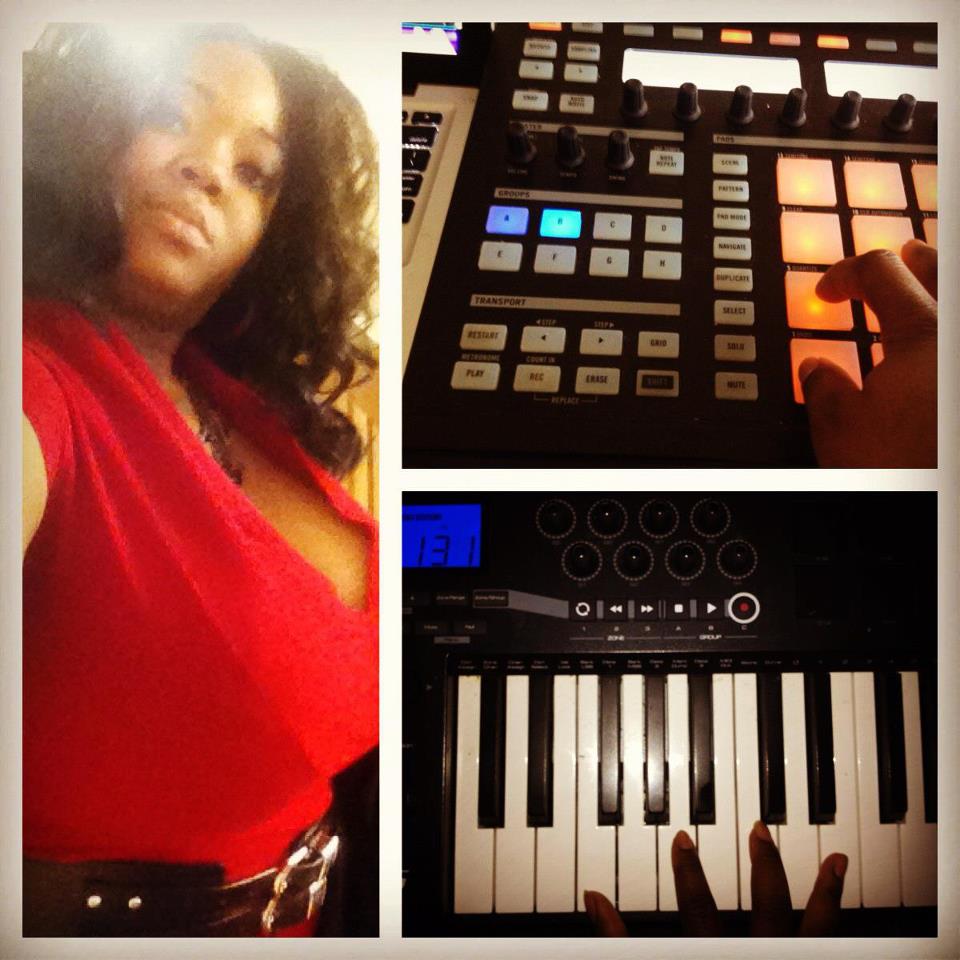

Achickwitbeatz presents the Instrumental Intel podcast, bringing you information instrumental to your artistic career including music industry news & tips, insights & interviews, and beats for your inspiration. Listen on Saturdays at 7 pm EST on Grander Radio and Achickwitbeatz.com.
Follow on Facebook, Instagram, Twitter, YouTube Audiomack & SoundCloud, and subscribe on your favorite podcast platform. Download the Grander Media app to listen to Grander Radio on the go.


- Art
- Independent Labels
- Internet Radio
- Music Documentaries
- Album Reviews
- Music History
- Music Industry News
- Free Game Friday
- Free Downloads
- Poetry
- Books
- Interviews
- Did You See It?!
- Hip Hop History
- Hear Here
- Music News
- Hip Hop Documentaries
- Music Marvels Radio Show
- Think Piece Thursday
- Mini Documentaries
- Instrumental Intel
- Music Humor
- Indie Analysis
- Conversations & Quotables
- Music
- Resources for Artists
- Podcasts
- Beats/Instrumentals
- Music Education
00:01
Hey, thank you so much for tuning in to Instrumental Intel. I am your host, music producer Achickwitbeatz, and I'm glad that you're here with me. Today's episode, we're gonna continue with week three of Year in Creative Strategy sessions, and this week's focus is strategic music release planning for sustainable growth.
00:19
So I'm excited to be bringing this episode to you. And of course, it's gonna have music industry news and beats by me for your inspiration. So before I go ahead and drop that first beat, I wanna give a shout out to my home station, Grander Radio out of Grand Rapids, Michigan. And with that, let's go.
[BEAT BREAK]
09:14
Hey, this is music producer Achickwitbeatz, and you're listening to my podcast Instrumental Intel.
12:35
Hey, I'm Achickwitbeatz, multi-genre music producer and strategist to indie artists and labels. Visit achickwitbeatz.com for resources for artists and instrumentals in various genres available for songs, vlogs, blogs, podcasts, themes, TV, film, commercials, and more. Once again, that's achickwitbeatz.com. That's A-C-H-I-C-K-W-I-T-B-E-A-T-Z.com. Let's make something happen.
13:05
Alright, I'm back with the music biz brief. First up, YouTube will stop supplying streaming data to Billboard's US charts beginning January 16th, following changes to Billboard's stream weighting methodology. After recently narrowing the gap between paid and ad-supported streams, YouTube argues Billboard's formula still undervalues free, ad-supported listening and wants all streams counted equally. As a result, YouTube views will no longer factor into Billboard Hot 100,
13:33
or Billboard 200, ending a partnership that dates back to 2013. So this decision revives a long-running industry debate over whether paid and free streams should be treated equally and what that means for how success is measured. I personally think this is a very bold step for YouTube, and I'm kinda looking forward to seeing what comes of this. The new Bain & Company report shows that while streaming service playlists remain the most common way Americans discover music, there's no single method that dominates.
14:02
Among over 5,000 U.S. respondents, 56 % ranked DSP playlists in their top three discovery methods, followed by recommendations and reviews, which was 44%, social media at 43%, and films or TV at 42%. The report notes 18 different discovery channels were cited by at least 5 % of respondents, with social media leading for listeners aged 18 to 24. So, some good statistics to know.
14:30
Also, Universal Music Group is offering to sell downtown's Curve royalty accounting business to try to secure the European Commission's approval for $775 million acquisition of downtown music holdings. Regulators have raised concerns that keeping Curve could give Universal access to sensitive royalty data from competing labels and publishers. The proposal would spin Curve off as a fully independent company with strict data separation and a long-term ban on Universal buying it back.
15:00
The EC is expected to reach a final decision by February 27th of 2026, while independent music organizations continue urging regulators to block the deal. Alright, that's it for the music biz brief. I'm gonna take a quick pause for the cause and then I'll be back right after this. Keep it locked.
[BEAT BREAK]
23:20
Hey, this is music producer Achickwitbeatz, and you're listening to my podcast Instrumental Intel.
[BEAT BREAK]
27:20
Hey, I'm Achickwitbeatz, multi-genre music producer and strategist to indie artists and labels. Visit achickwitbeatz.com for resources for artists and instrumentals in various genres available for songs, vlogs, blogs, podcasts, themes, TV, film, commercials, and more. Once again, that's achickwitbeatz.com. That's A-C-H-I-C-K-W-I-T-B-E-A-T-Z.com. Let's make something happen.
27:50
Alright, and as promised, back with strategic music release planning for sustainable growth. So first up, you know, of course, you pour a lot of time and energy and your talent into your music. So actually trying to figure out how to plan your releases so that way it's something that you can sustain and continue to gain listeners is a whole other subject on itself. So that's why we're going to talk about it a little bit and kind of give you some things that you need to consider in order to make sure that you're getting where you want to go.
28:18
So one of the things that you need to be aware of that as of 2023, there were an estimate of 120,000 tracks uploaded to streaming services every single day. So given the rise of AI music flooding the market, that number's probably a lot higher as of 2025. So planning out your release strategy can kind of keep your music from disappearing into that void and making sure that it's reaching the ears that you want it to.
28:45
So this is not to say that you have to compromise your creativity or anything like that. You got something fire, you know, that just kind of popped up. You can always work it into your strategy, but just kind of having a plan to go with, can make sure that you're not getting frustrated or disappointed just because there's so much out there that it's kind of drowning everything else out. So one of the first things that you want to kind of do when you're thinking this through is to take a look at what's worked for you this year. As far as your release.
29:14
releases went or if you didn't release anything this year but maybe the year before just kind of plan and see what worked for you and what you might want to improve. So when you're considering this you're going to think about the number of releases, the gaps you had between releases, the marketing support that you had for each release, did it get any playlist traction, did you retain listeners, and so some of other things that you might want to ask yourself too are which releases perform best and why.
29:41
Was it the song? Was it the way that you promoted it? Were there any releases that you kind of rushed or might have been under-supported? Did they actually align well with your audience engagement patterns? Maybe the timing was off. So there are a lot of things to kind of consider. Make sure that you're taking notes so that way you're looking at it from all potential angles. So this will help you choose the right pace for 2026 by noticing what you may need to do to kind of keep them engaged throughout the year. So of course there are
30:10
Definitely different release models. Again, this is going to depend on your artistic choices and your audience. So there's the singles first strategy. There's also EP centered releases, or you can do fewer higher impact releases. And you you just want to make sure that you're choosing a pace that matches what you have the capacity to do, not what you feel like you're being pressured to do. So in order to make sure that it's getting the traction that you want it to get,
30:39
You're gonna wanna make sure that you hit the full release cycle so that way you've got some pre-release content going up to kind of generate some buzz and then some actual focus around the week of the release and then post-release to make sure that you're following through. The good thing about making quality music is that it's timeless. So even if it's old to you, it's new to someone else, definitely keep promoting it. And that's something that...
31:05
If you're kind of observing and watching patterns online, a lot of independent artists kind of do that. There's a lot of hype building up to it, then there's a release day, and they tell you, and then you don't really hear that much of it past, you know, a week or so after the release date. So make sure, you know, especially now that the way things are set up with algorithms, stuff can come back or show up and appear in people's feeds weeks after you've forgotten about it.
31:32
So make sure that you're still sharing it after the fact. Also, another thing that you might want to try doing is matching your release timing to your audience activity. uh Make sure that you're checking your metrics in these social platforms that kind of let you know when your audience is active. So that way, you can kind of plan it to make sure that it's hitting their feeds around the same time that they'll actually be there.
31:54
Try to coordinate your content themes around your releases. And now when I say content, I'm not calling your music content. I'm talking about what you're using to promote it. And now sometimes artists get kind of upset over that. But I just want to clarify that you still need content to promote your art. So alright, some practical resources that you might want to use for your release planning. Use content calendars. There are different project management tools to be able to schedule your promotion across platforms.
32:24
getting one of my favorite tools to use this buffer. There's also Later and many others that can do the same thing, depending on what your goals are. So make sure that you research the ones that'll work best for you and also make sure that you have your metadata and like all your assets. This is another marketing industry term that's referring to everything related to your release. So this is your actual files, the MP3s, the waves, your radio edits, your full versions, your
32:54
album covers, JPEGs, all that stuff, anything related to it you want to make sure that you have it organized so that way it's easy to access whenever you need. So your action step for this week, make sure that you map out a tentative 2026 release calendar that includes your release windows, how much time you're going to black out for marketing before, during, and after. Choose the content themes that you want to surround the release.
33:21
And then make sure that you're also planning for rest and recovery periods. There's a lot going on in the world right now and while making art is therapeutic, you also have to make sure that you're really, really taking care of yourself. So again, remember this is not to restrict your creativity or limit you in any way, but actually planning strategically can make sure that you're accomplishing the goals that you want to and seeing the results that you're hoping for.
33:48
Alright, that's it for this week's year-end creative strategy session. I'm gonna get back to the beats before coming back to close out the episode. Keep it locked.
[BEAT BREAK]
43:04
Hey, this is music producer Achickwitbeatz, and you're listening to my podcast Instrumental Intel.
[BEAT BREAK]
57:05
Hey, this is music producer Achickwitbeatz, and you're listening to my podcast Instrumental Intel.
[BEAT BREAK]
59:36
Alright, and that's a wrap for this episode of instrumental intel. I've been your host, music producer, Achickwitbeatz, and once again, I want to thank you for tuning in. I want to thank my home station, Grander Radio out of Grand Rapids, Michigan. Make sure you come back next week. I got more goodness lined up for you as we continue with the year-end creative strategy session. So, till next time, you know where to find me. Tune in, tell a friend, and I'll see you then. Peace.


![Hear Here: Achickwitbeatz - Dopamine & Serotonin [Single]](https://images.squarespace-cdn.com/content/v1/52b0b90ae4b0293bfed0d692/1710852808557-EZYGFDIBHLBSIRFOVS1Q/Dopamine+%26+Serotonin.JPG)





![Hear Here: Dagga Man- "Analytics" [Prod. by Achickwitbeatz]](https://images.squarespace-cdn.com/content/v1/52b0b90ae4b0293bfed0d692/1584638158548-9R55AZLWZIDFJC8LATV6/IMG_2212.JPG)







![Making Music on a Budget [Infographic]](https://images.squarespace-cdn.com/content/v1/52b0b90ae4b0293bfed0d692/1582844361438-3JTE5NT3EL51FHXC0WJI/making-music-on_1929722%25281%2529.jpg)

A homage to the golden era of 1990s instrumental beat vinyl. Crafted as the perfect partner for freestyling MCs, dancers, and DJ culture. | Visit Achickwitbeatz.com for your instrumental needs & dope stuff for music lovers.